Into the Congress fold
A road, a siropa, and a Mahaan Sikh title — the start of a friendship between a Nihung chief and an anti-Sikh Congress chief minister. Whose allegiance with the state would eventually lead him to be complicit in the attack against the holiest shrine of the Sikhs.
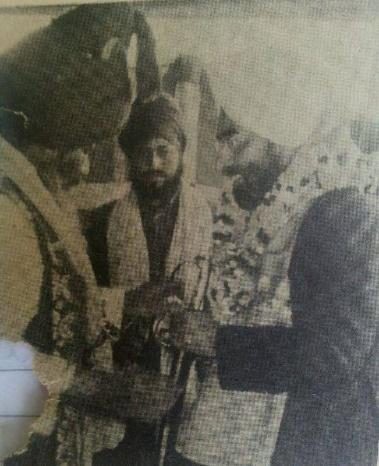
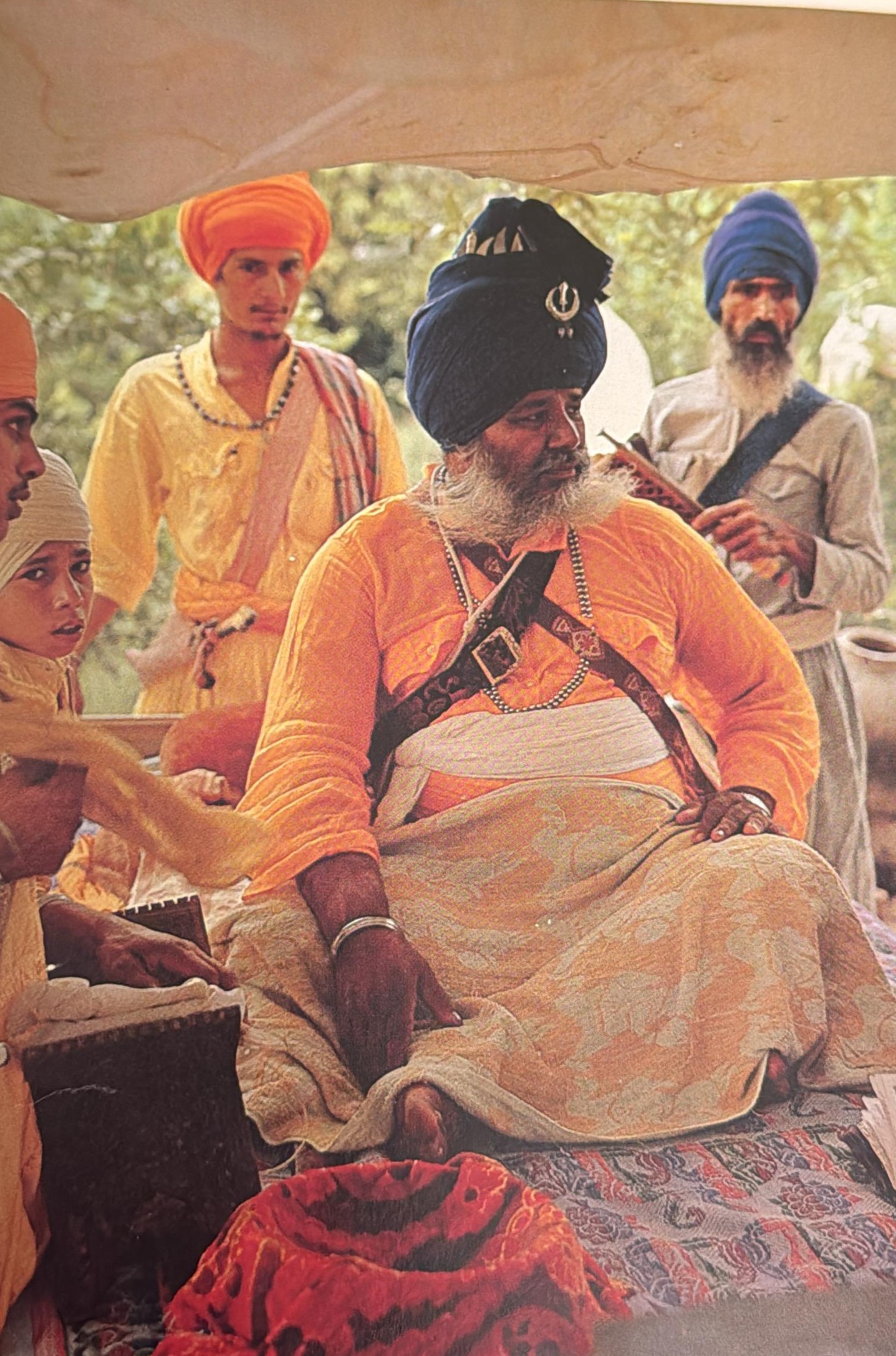
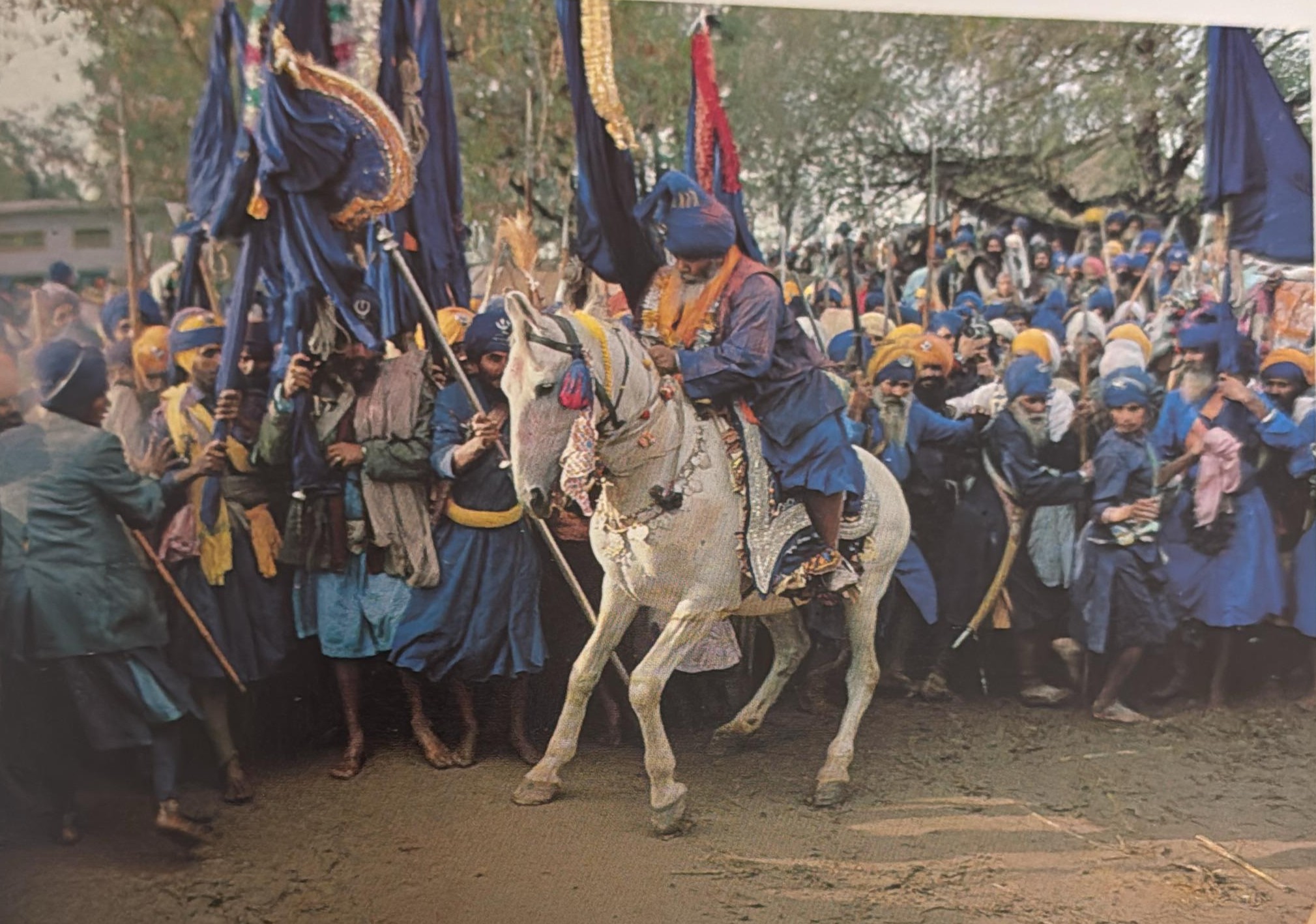
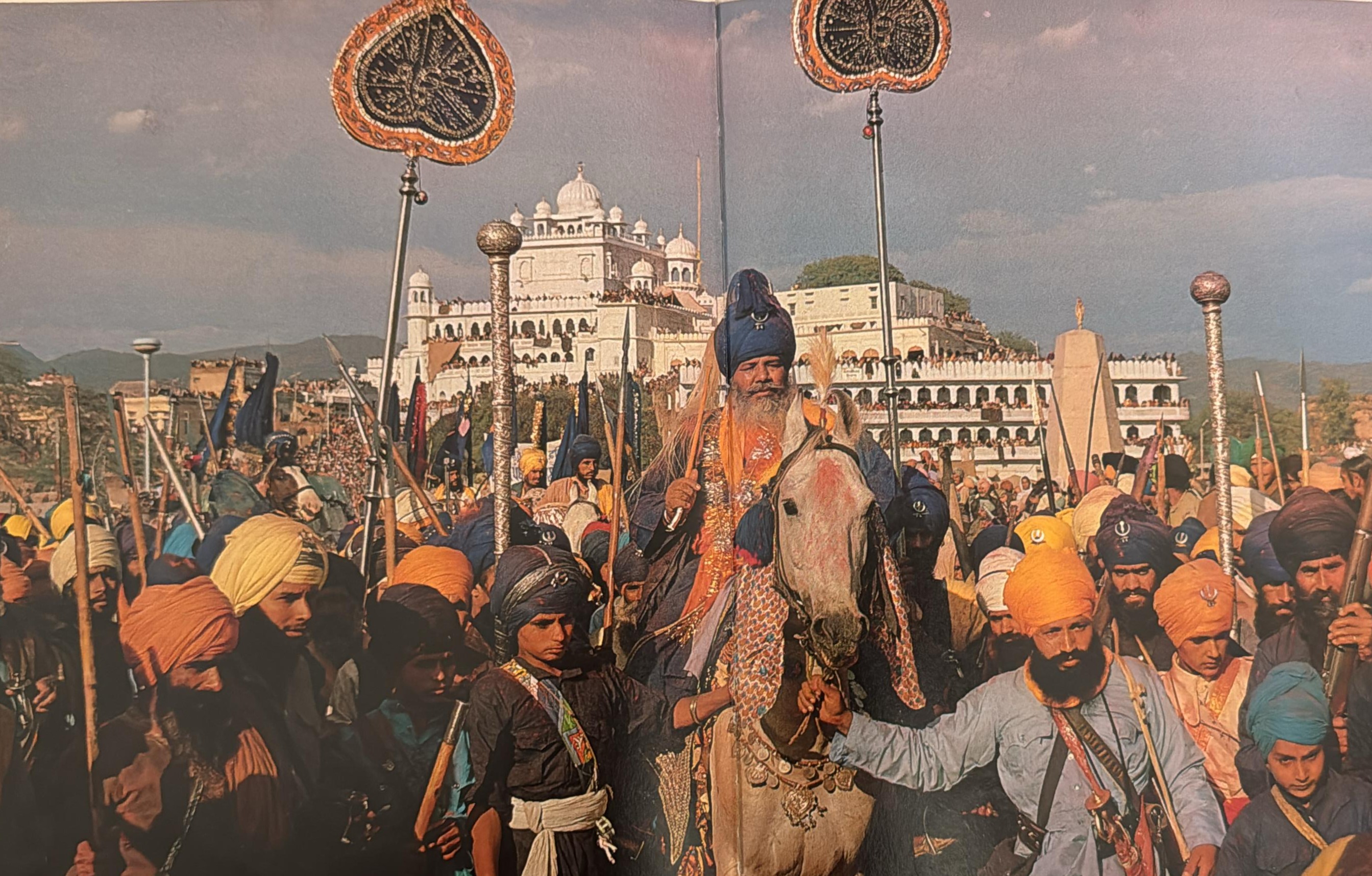
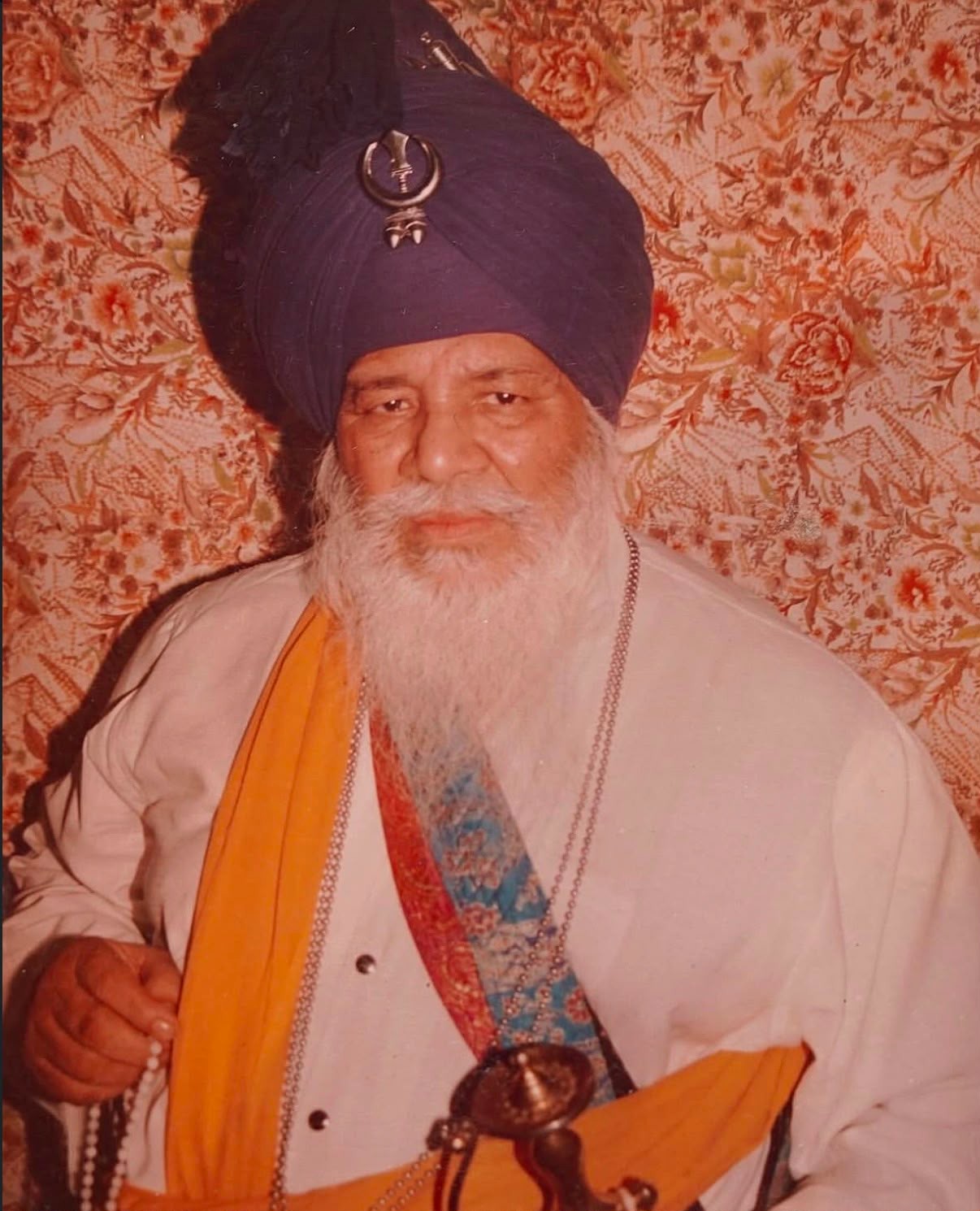
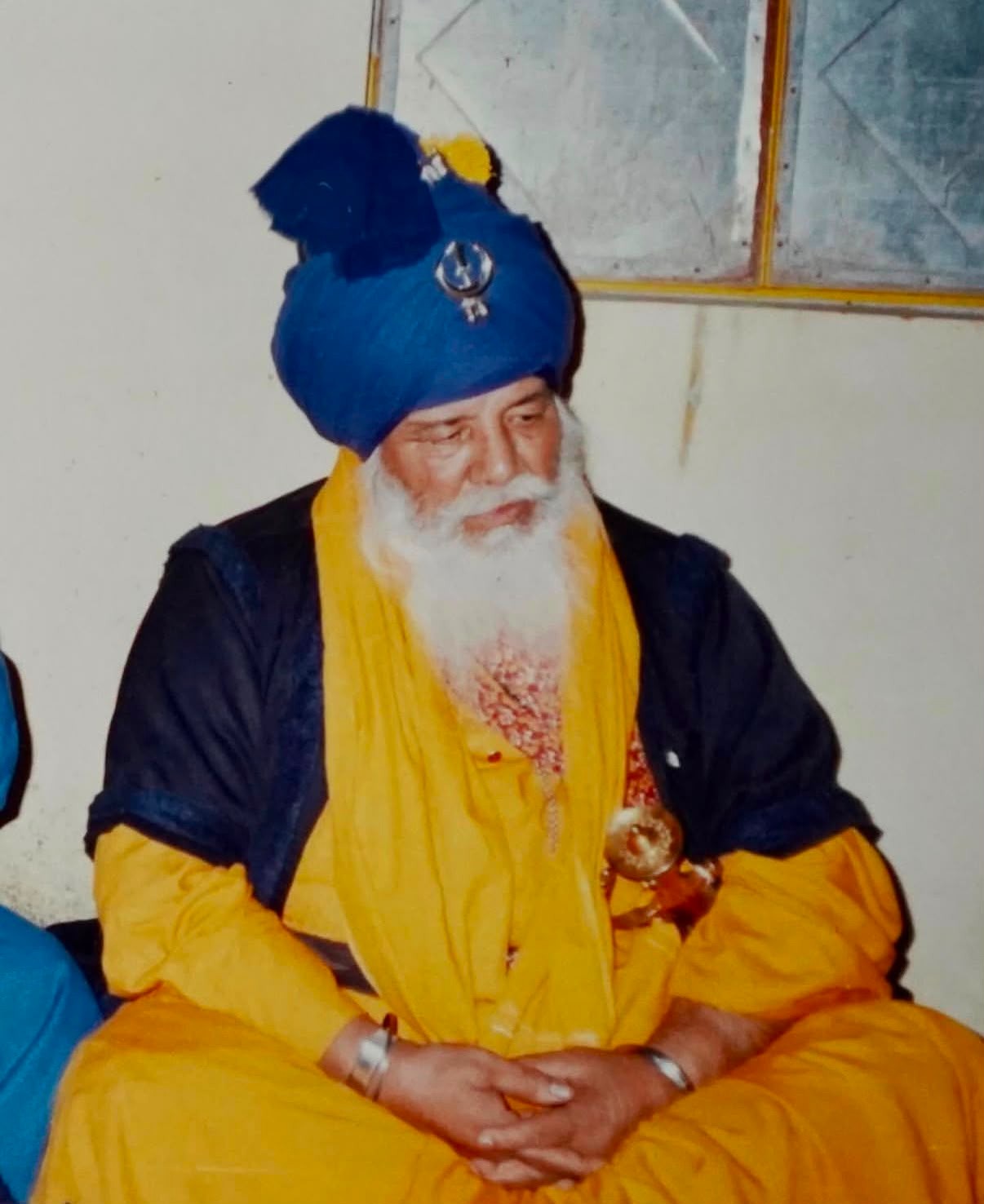
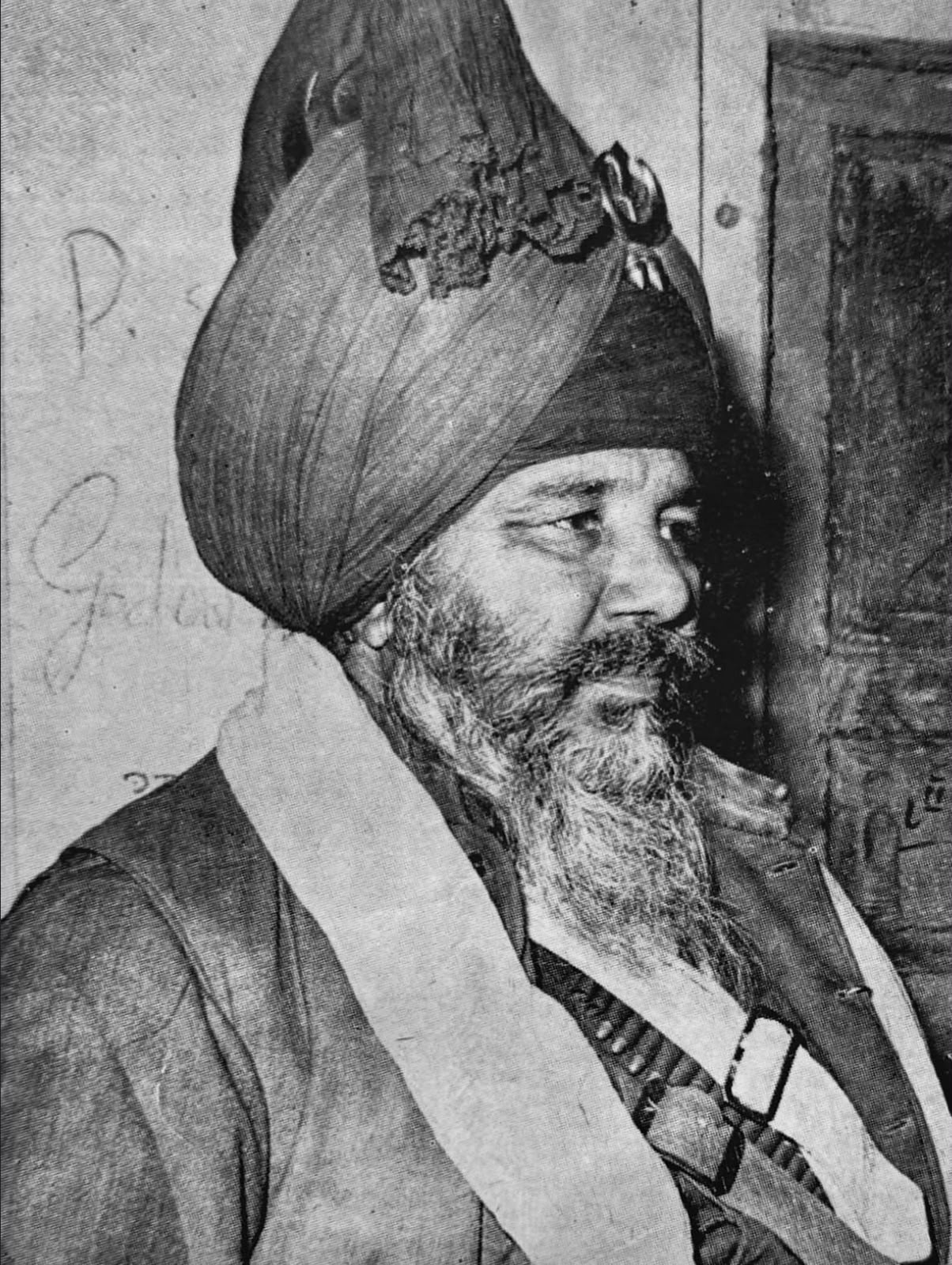
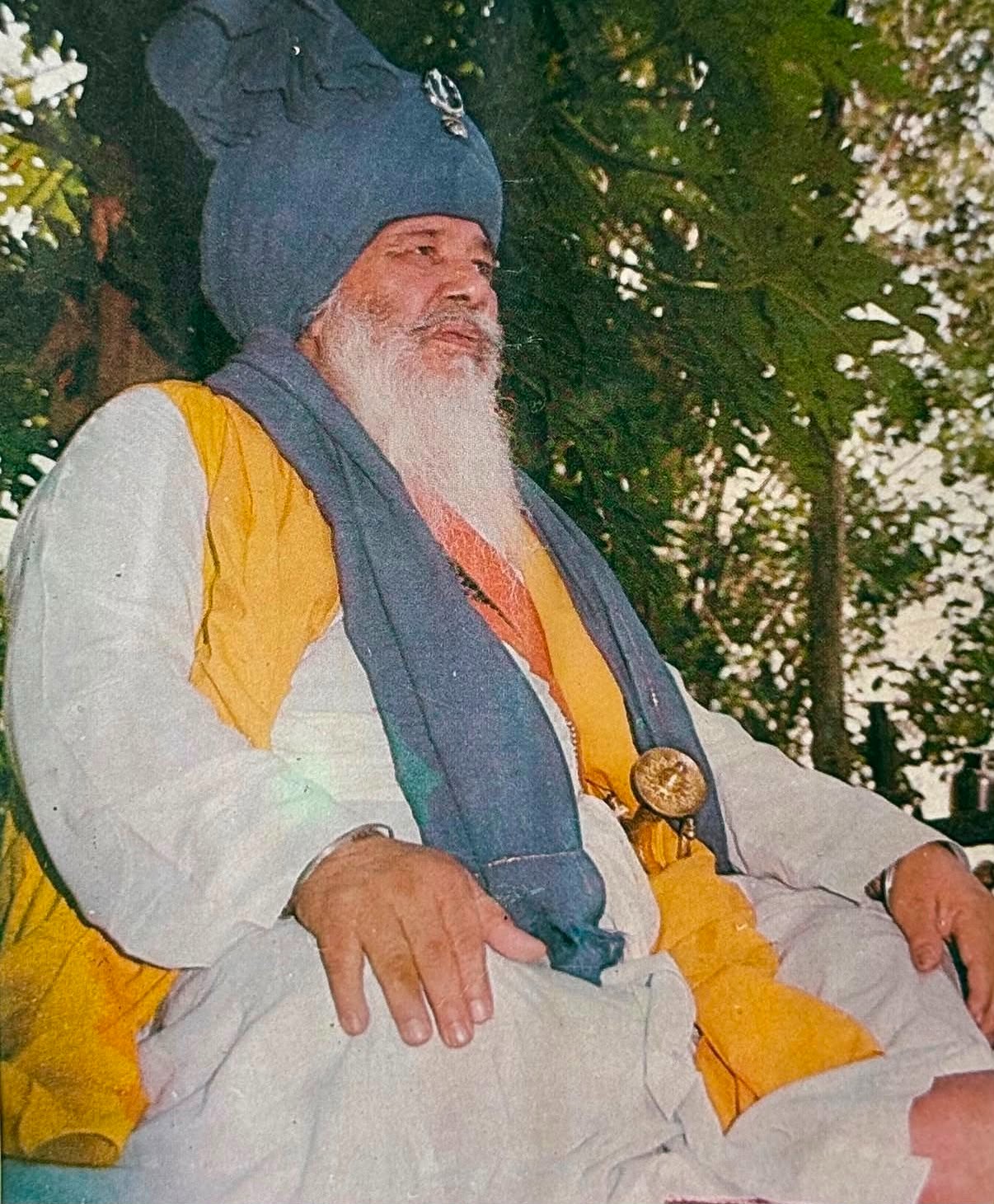
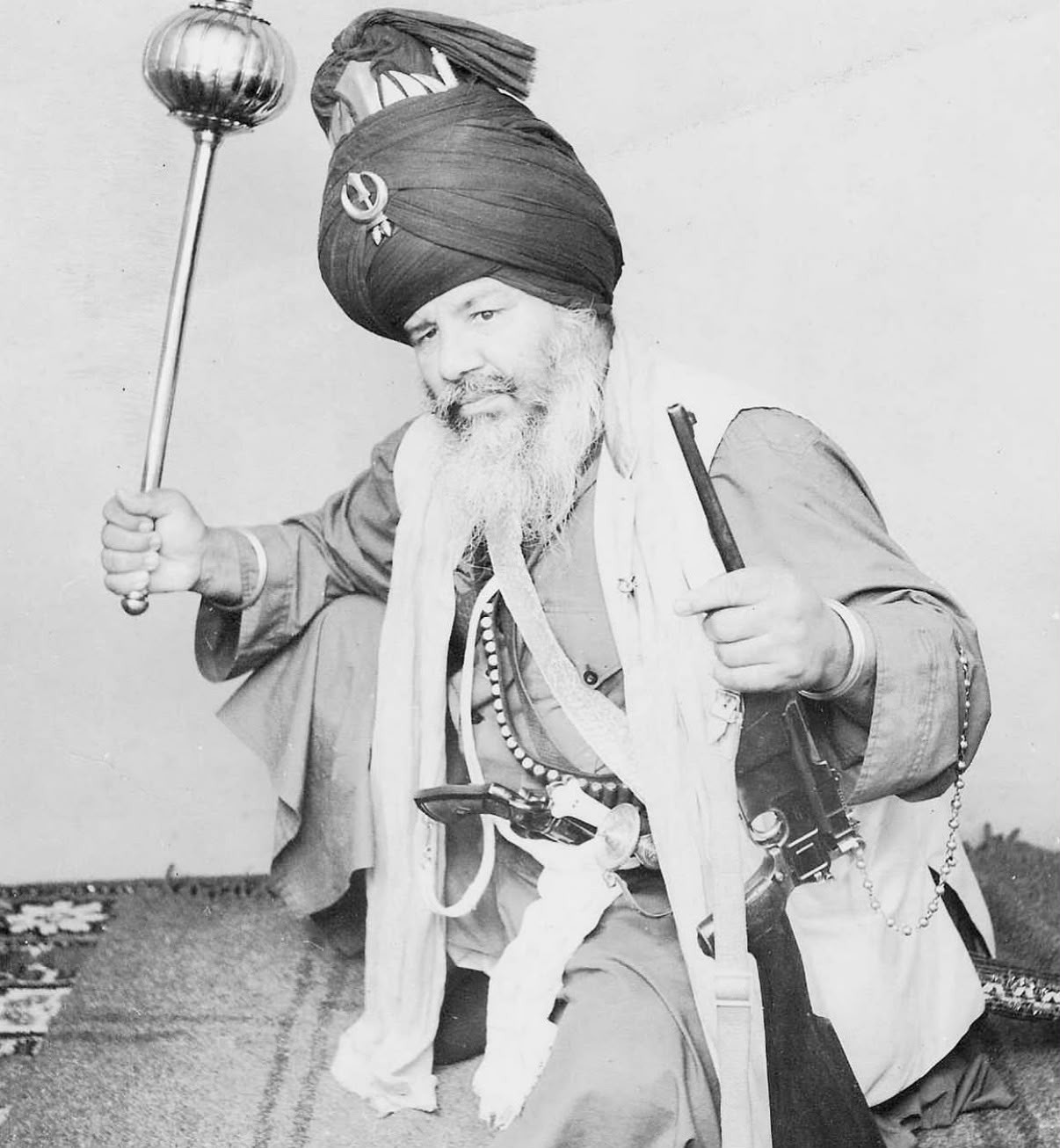
On April 10, 1973, Giani Zail Singh — then Chief Minister of Punjab — renamed the road connecting Anandpur Sahib and Talwandi Sabo as Guru Gobind Singh Marg. At the ceremonial procession marking the occasion, Santa Singh honoured Zail Singh with a siropa and a kirpan, and conferred on him the title of Mahaan Sikh. In return, Zail Singh and the Congress party gifted Santa Singh a Mercedes.
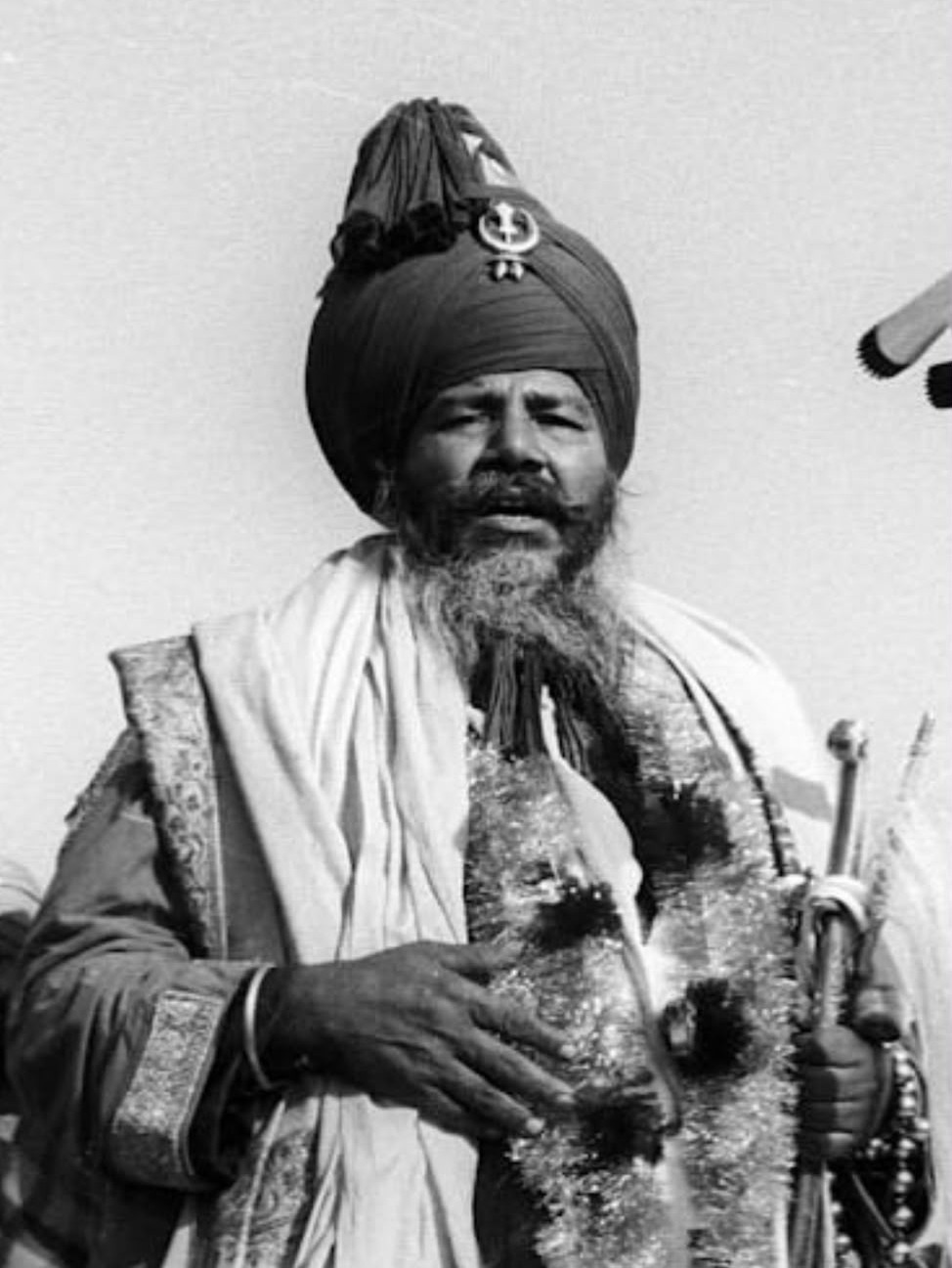
It was the beginning of a relationship that would put the Budha Dal Nihungs at Congress(I) election rallies through the rest of the decade — and Santa Singh blessing Indira Gandhi on the campaign trail.
“Towards the early '70s, however they became close to Zail Singh who presented a foreign car to Baba Santa Singh. Since then the Budha Dal Nihungs have been seen at the Congress(I) election rallies and Baba Santa Singh has been blessing Mrs. Gandhi during the elections.”
A studied absence
When the Panth united after the 1978 Saka, and when the Dharam Yudh Morcha called every Nihung Jatha to serve — the Budha Dal was ordered to stay home.
Santa Singh's loyalties had already shown themselves once before. In 1975, Chief Minister Giani Zail Singh objected to wrestler-actor Dara Singh's film Raj Karega Khalsa; when Dara Singh couldn't satisfy him, it was Santa Singh — not the government — who banned the film outright, holding it up for a year and a half across Punjab. It lifted only after a word from Zail Singh's own political patrons, with an apology letter from Santa Singh arriving the very next day.
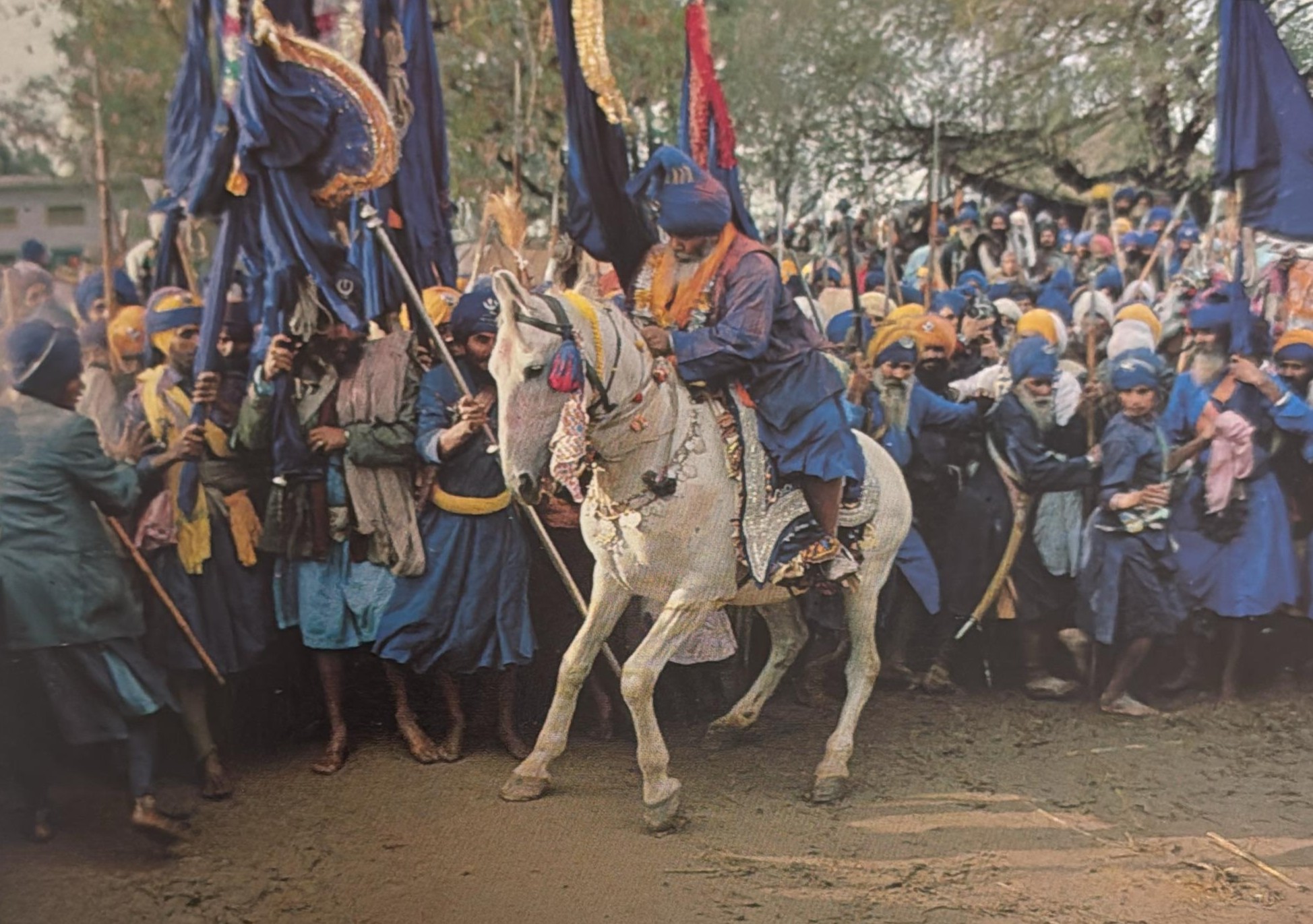
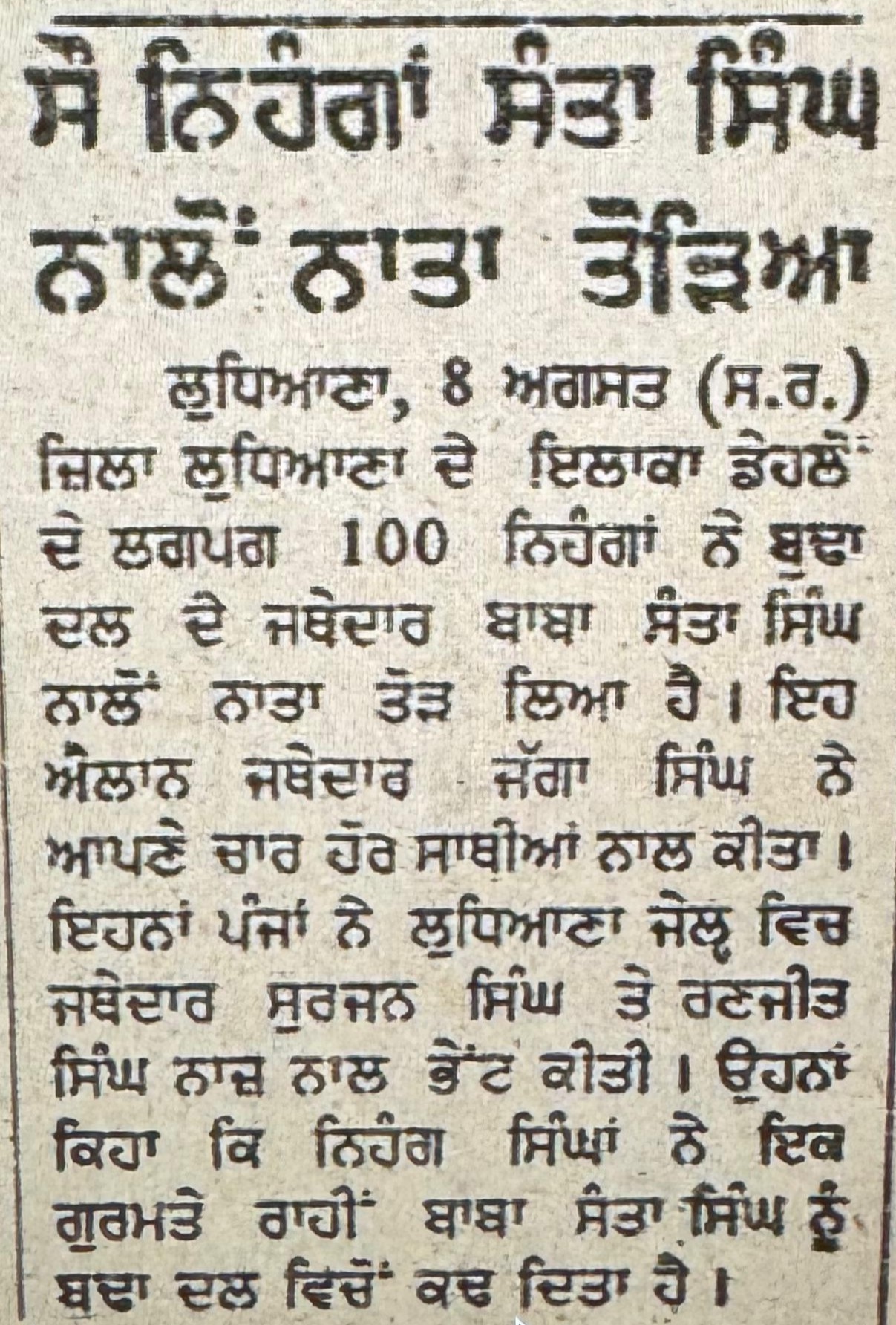
Four years later, when Sant Jarnail Singh Ji Bhindranwale and the Akalis launched the Dharam Yudh Morcha in 1982, Santa Singh did not join it either and went further, issuing a written order to every Nihung jatha in the country prohibiting their participation.
“All the Sant Mahaatma and Panthic Jathebandia had actively supported the Morcha, it was only one, Santa Singh Budha Dal who hadn't.”
The order reached even the Nihungs of Harian Velan, whose senior, Baba Nihaal Singh, recalled the moment the Budha Dal's "high command" letter arrived — and the choice his own Jatha made instead.
“The Dharam Yudh Morcha has started by Sant Jarnail Singh Ji and Sant Harchand Singh Longowal and the sangat was full of excitement… The High Command of the Nihung Singhs at the time who we considered Shiromani (highest), issued a letter… That no nihung singh organization shall not participate in this morcha.” Anchor asked why? “He said that this is a war of seats (kursi yudh). And whoever participates in it we will take action against them… We got the whole jatha together, especially our panj pyare singh and elder singhs of the jatha and called a meeting to get their opinion… The jatha collectively said we are going to have to go with the Kaum and whatever punishment the high command gives we will accept.”
Ghalughara 1984
While tanks moved on Darbar Sahib and Woodrose swept nearly 200 gurdwaras, the Budha Dal's thousands stayed in Bathinda.
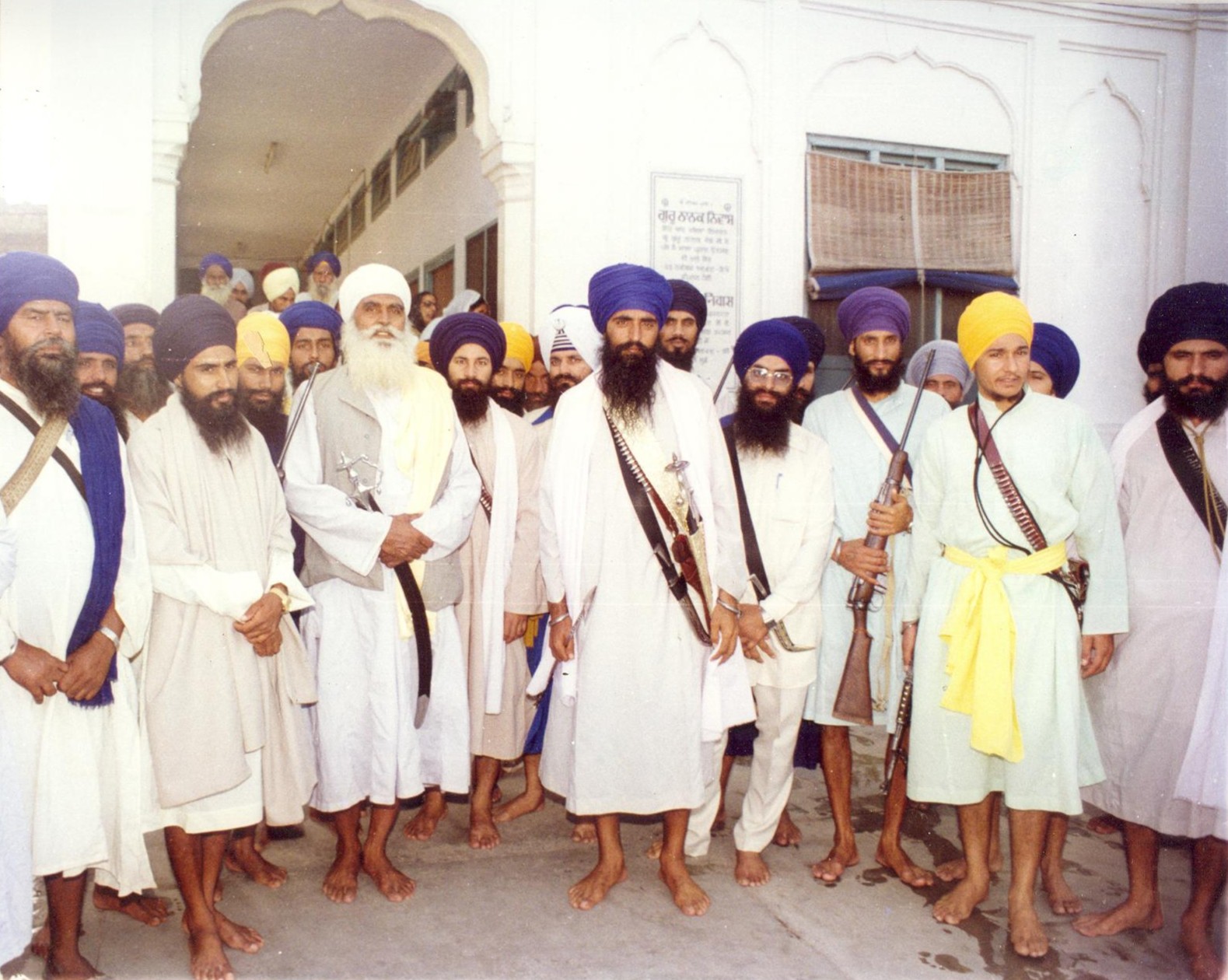
During the June 1984 attack on Sri Darbar Sahib, other Nihung Dals took the road to Amritsar as a matter of duty — 30,000 Singhs, under Baba Daya Singh of the Baba Bidhi Chand Sampardai, marched from Jhabal toward the city before the army sealed the route with tanks. Santa Singh sent no one, and issued no call.
“In the leadership of Baba Bidhi Chand Sampardai head Baba Daya Singh Ji Sur Singh, 30,000 Singhs headed towards Amritsar. As the jatha was heading from Jhabal to Amritsar, the army had placed tanks to seal the area to stop the Singhs from heading forward.”
Operation Woodrose followed, sweeping close to 200 Sikh gurdwaras across Punjab. The Budha Dal was not deployed there either — even as the Indian Army's own bulletin was, that same month, describing Amritdharis in terms that made the stakes for any Sikh institution unmistakable.
“Some of our innocent countrymen were administered an oath in the name of religion to support extremists and actively participated in the act of terrorism. These people wear a miniature kirpan round their neck and are called 'Amritdharis'. They have to be subdued to achieve the final aim of restoring peace in the country… These people may appear harmless from outside but they are basically committed to terrorism.”
The "Sarkari Sewa" of Sri Akal Takhat Sahib
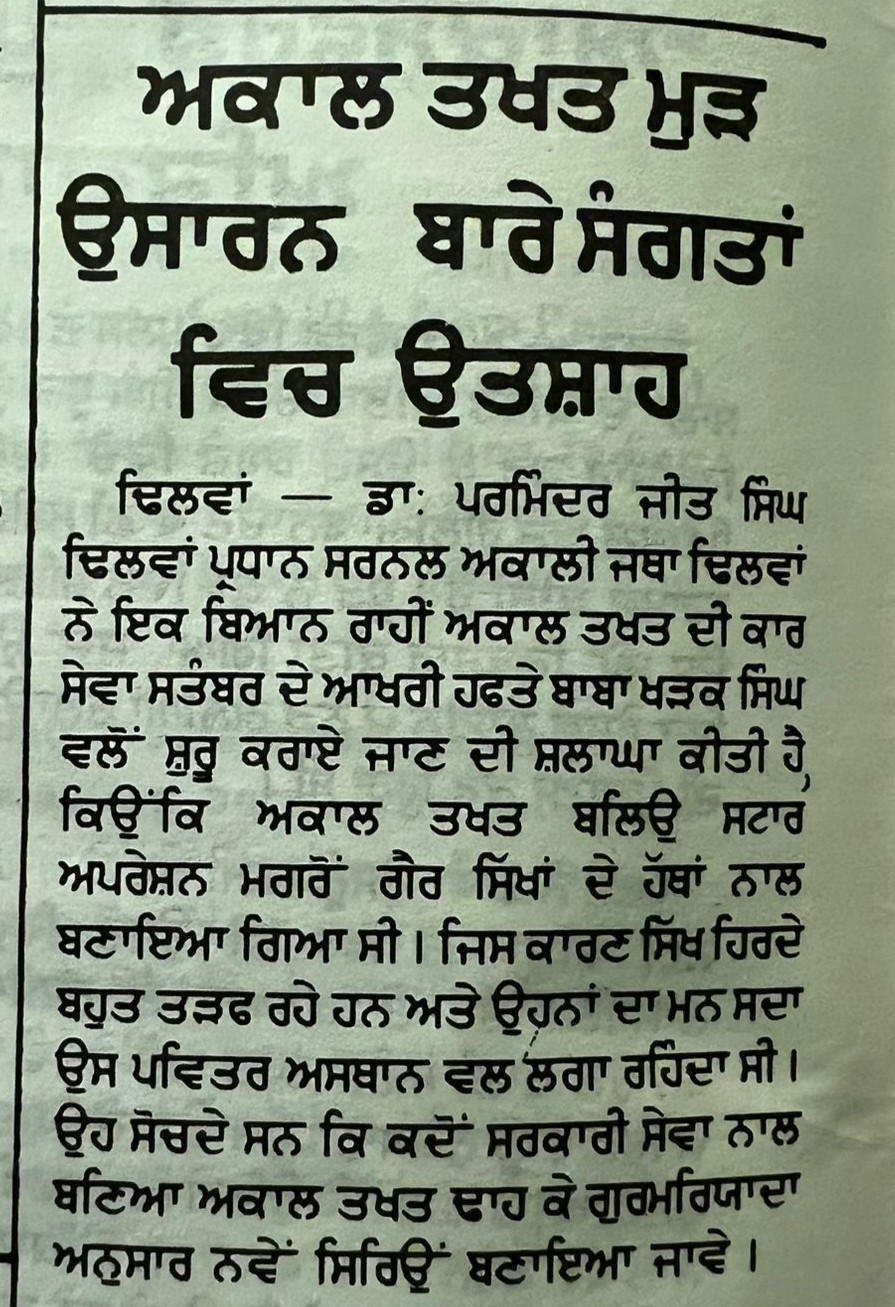
The government wanted Sri Akal Takht Sahib rebuilt before its destruction became a turning point that could awaken Sikh resistance to the State. When the Panth’s traditional builders refused, the State turned to an old ally.
Who would rebuild it
Within days of the army's assault, the Indian state moved to repair the bullet-scarred, tank-damaged Akal Takht — anxious that the sight of the ruins would fuel further unrest. Union minister Buta Singh first approached Baba Kharak Singh, renowned for a lifetime of building historic gurdwaras. Still furious over Bluestar and the killing of ten sewadars at Baba Sham Singh's dera days earlier, Baba Kharak Singh's answer was blunt.
“Which face do you come to me with after attacking Sri Darbar Sahib with tanks and artillery?”
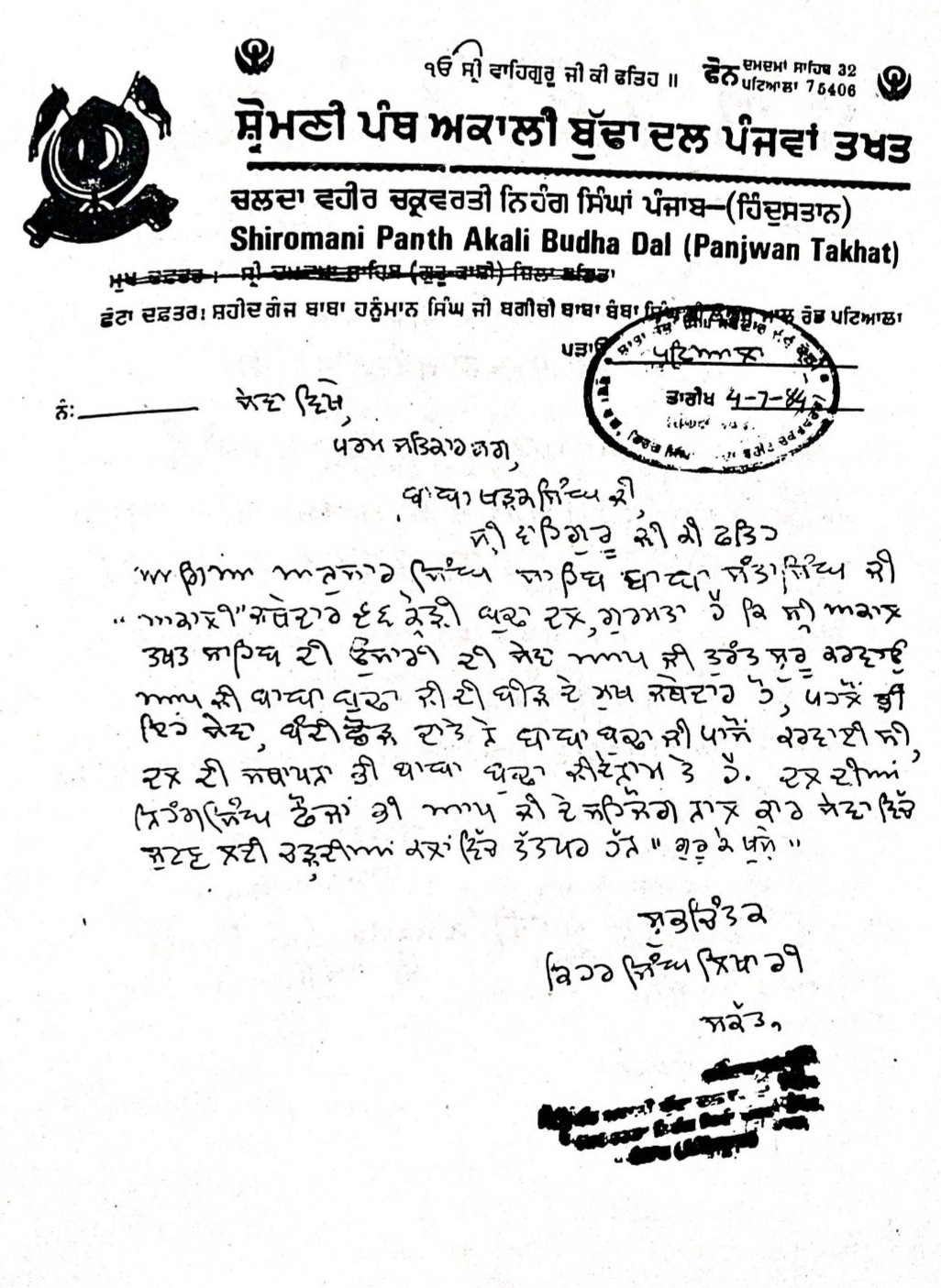
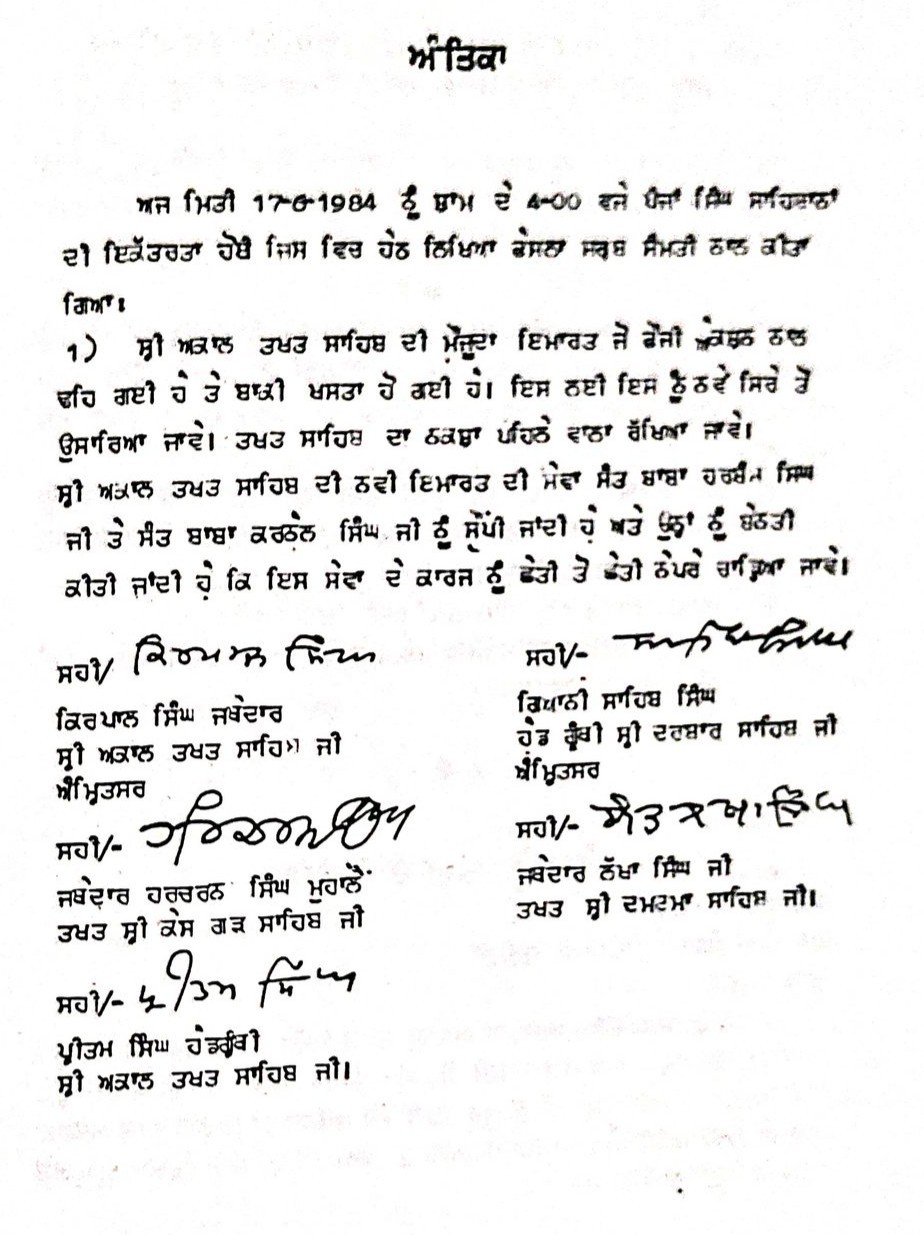
Giani Kirpal Singh, the sitting Jathedar of the Akal Takht who would later sign the order against Santa Singh, recorded the same refusal in his own eyewitness account — with the added detail of Baba Karnail Singh and Baba Harbans Singh's reaction on seeing the ruins for themselves.
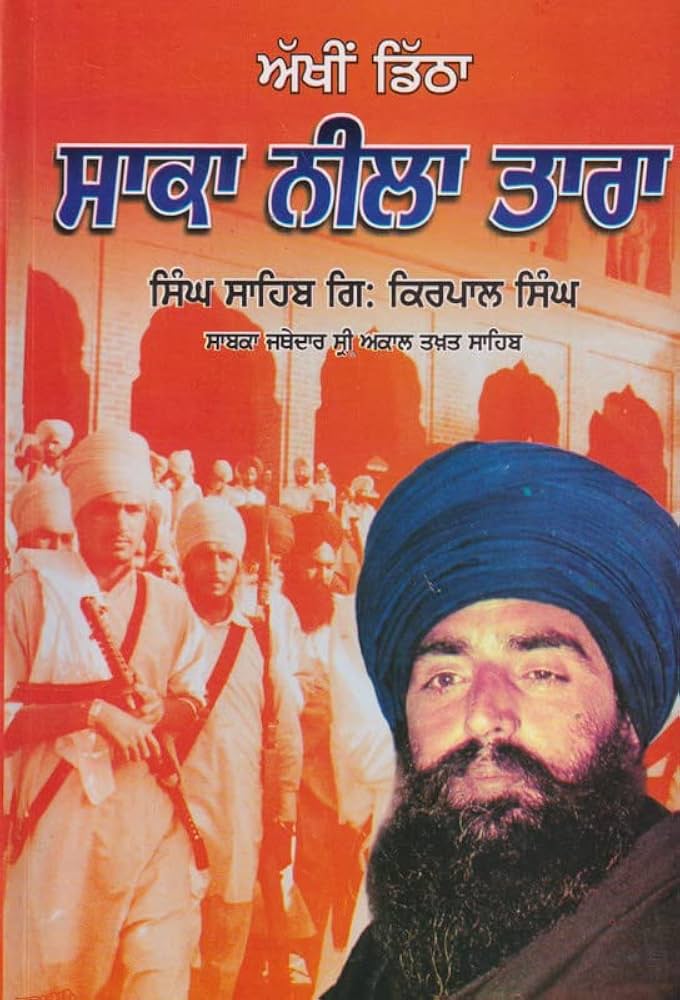
"While you (Buta) and Zail Singh were in the high ranks, your government still attacked and did this destruction, this is a shame on you. Let them destroy all the gurdwaras and then we can make them all together at once."
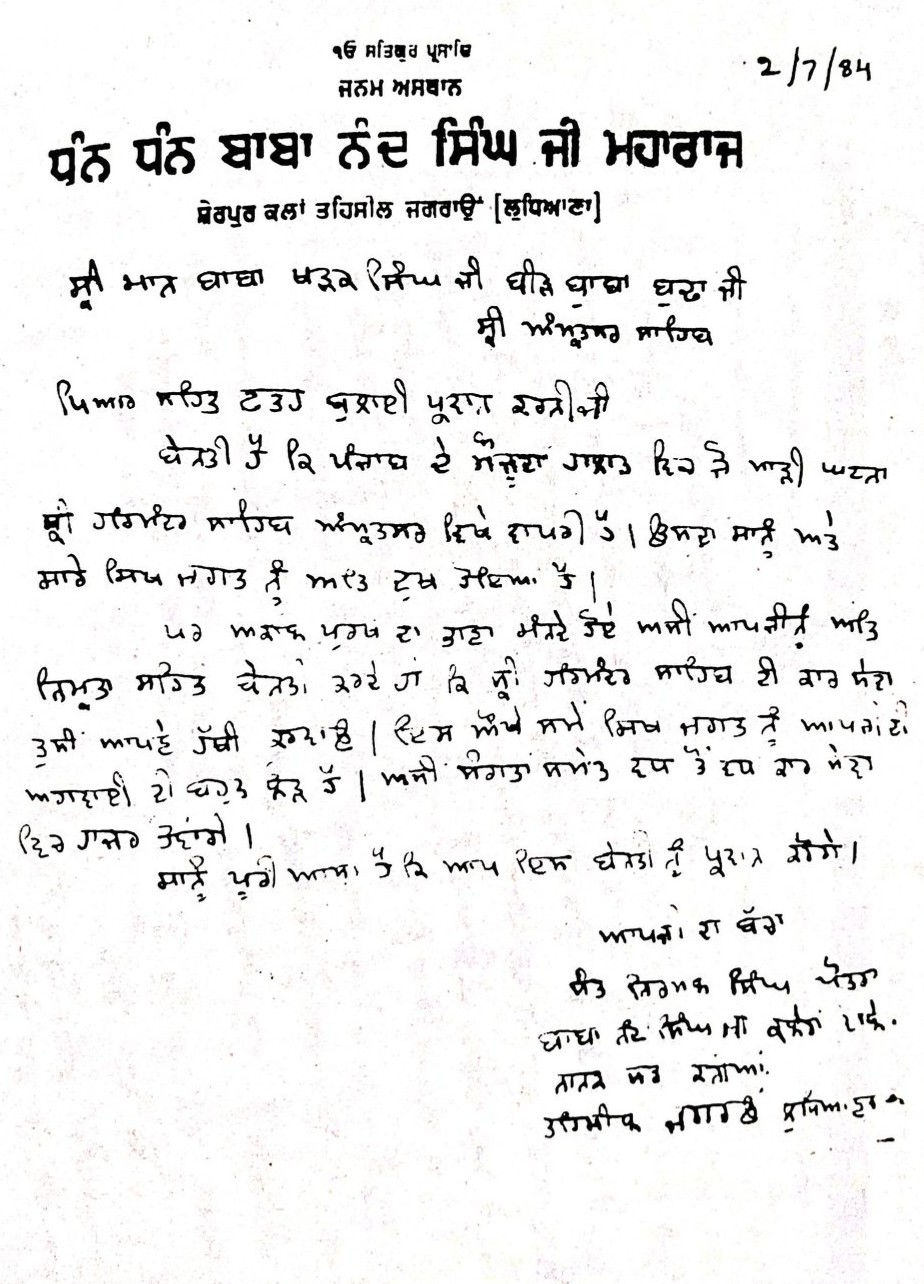
He would only act, he said, on the hukam of the Panth — not on instruction from the government. The Singh Sahiban then turned to these two Delhi-based builders, who set two conditions before agreeing: that Baba Kharak Singh's involvement be secured, and that the army first withdraw from the Darbar Sahib complex. The government could not accept the second condition.
"Singh Sahiban gave a written piece to them and told them to do the Kar sewa but they had 2 conditions: 1. We will only do the Kar Sewa with the assistance of Baba Kharak Singh. 2. The sewa will only start when the army is withdrawn from the complex of Darbar Sahib."
Santa Singh steps in
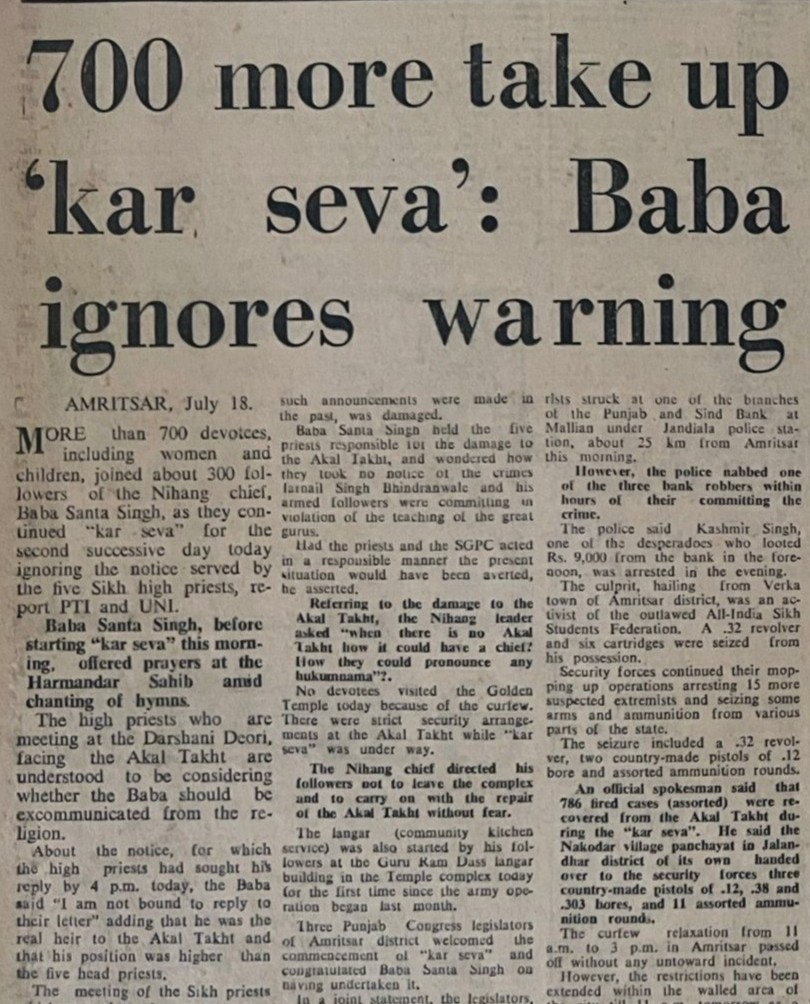
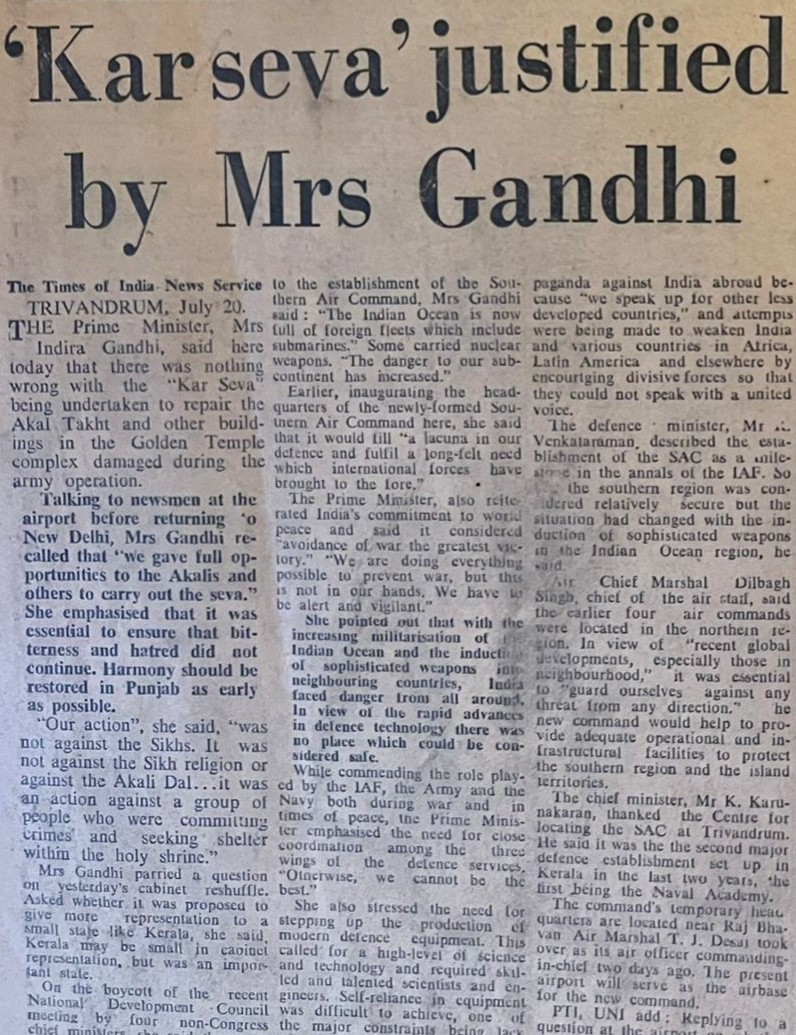
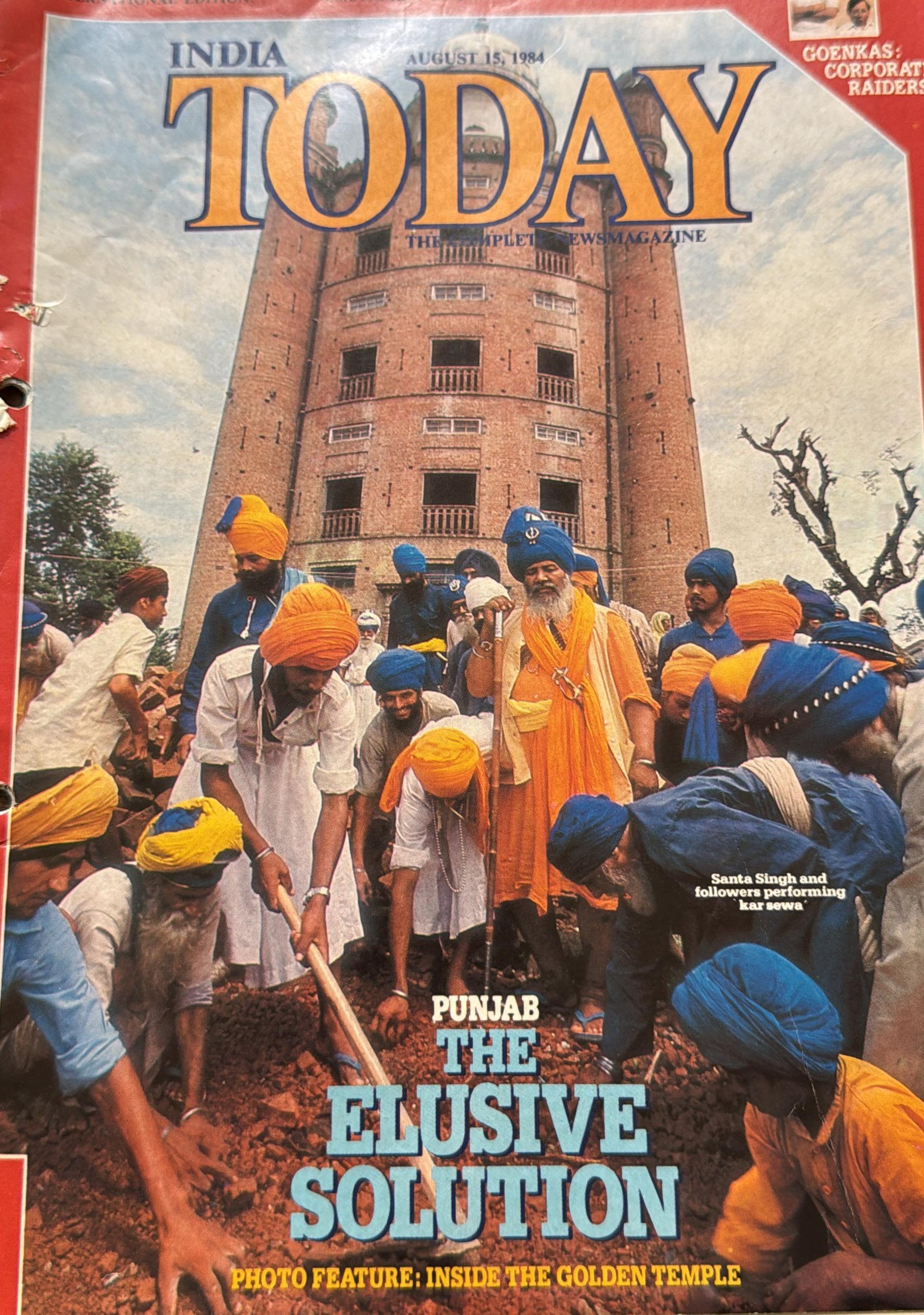
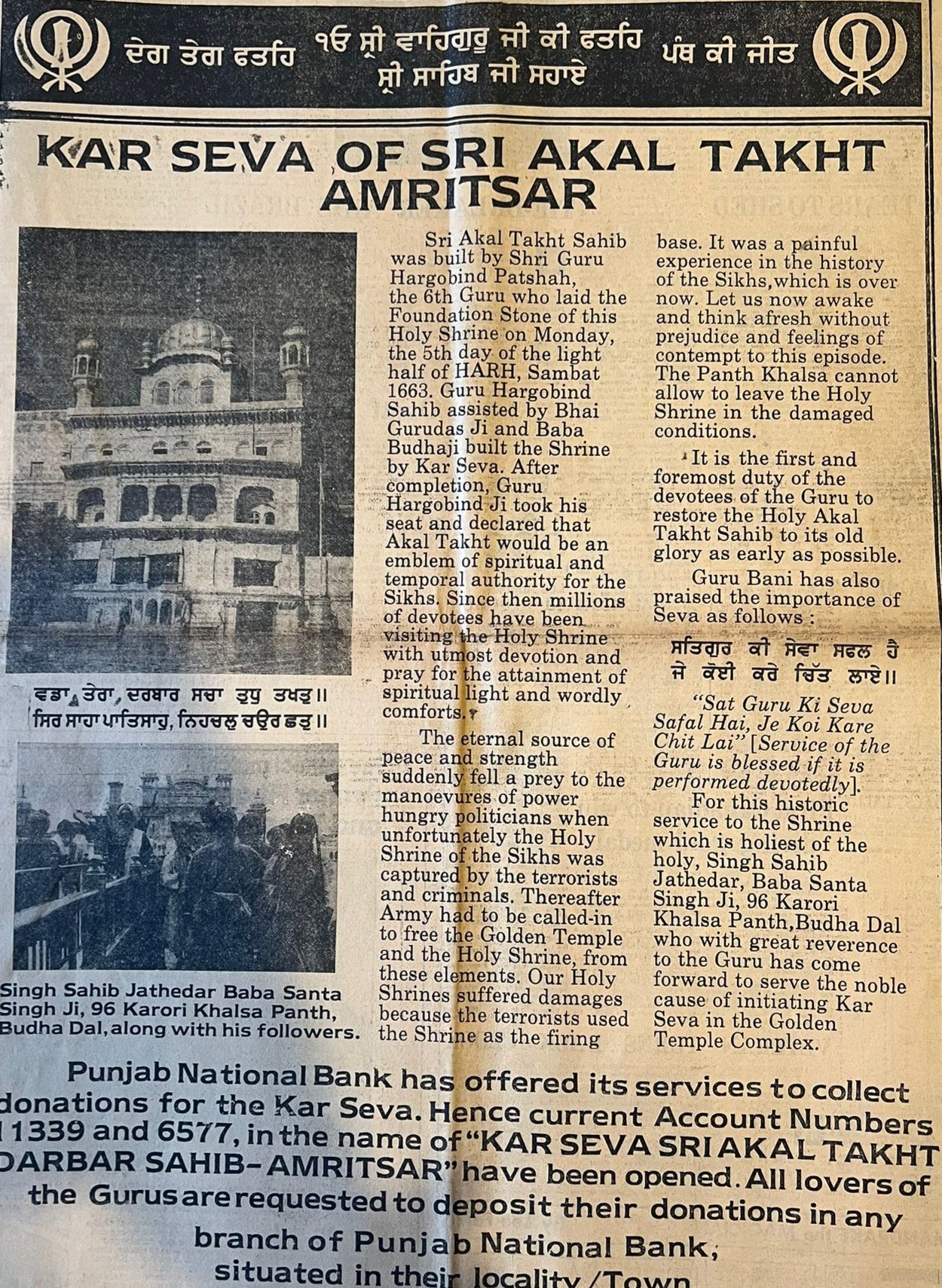
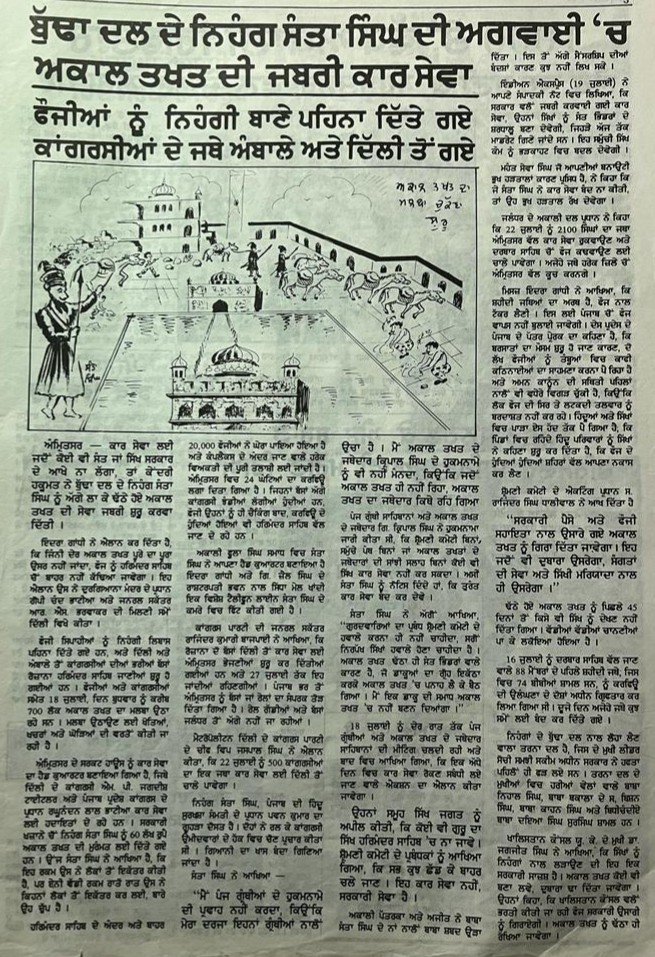
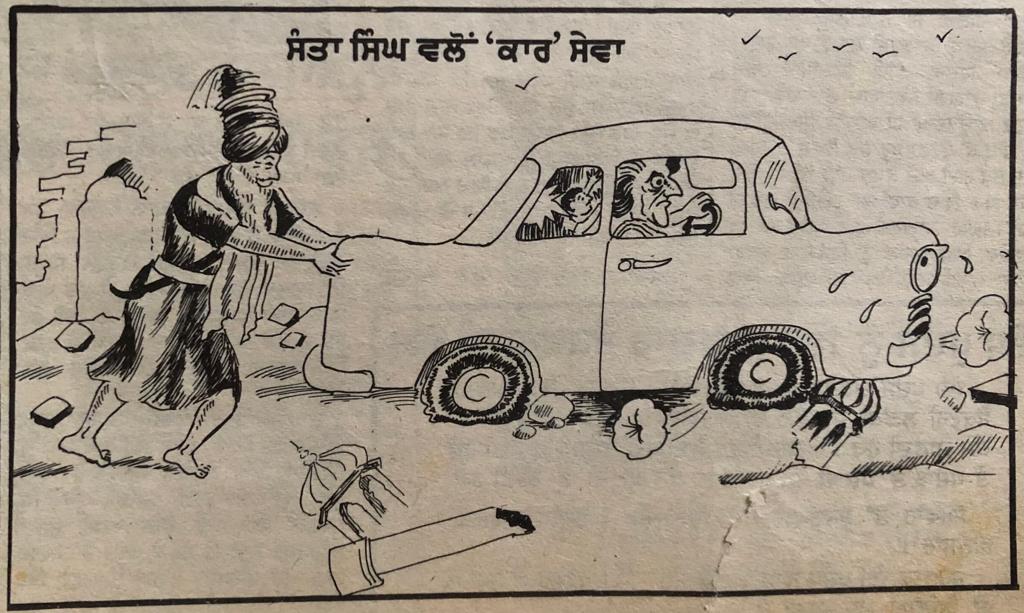
With the builders' conditions unmeetable, the government turned to an old ally. Three buses of Nihungs, escorted by police commandos, left Bathinda for Amritsar under cover of night. On July 17, Santa Singh and his men performed ardas and began clearing debris from the Akal Takht, under army protection, while officials from Delhi flew in to have it filmed for Doordarshan.
"3 buses full of nihungs, with the protection of the army leave Bathinda and arrive at Amritsar. Indira and her advisors had left talks with Akalis and Singh Sahiban and decided to make Santa Singh Nihung the front of this sewa. In the night, police commandos transferred nihungs on government buses. On July 17, at 7am, Santa Singh and his nihung army did ardas under the protection of army officials and started picking up the debris of Akal Takhat. To look over the operation, Arun Nehru and K.C. Pant had come from Delhi to Amritsar."
“Santa Singh and his followers played their part for the cameras; for international reporters who broadcasted the images worldwide, to show the sight of the Nihangs dutifully removing the debris by hand.”
“In the evening the start of the Kar Sewa was videotaped. This was taken to Delhi personally by KC Panth and Arun Nehru for being broadcast on Door Darshan. While the video was being shot inside, outside people were shouting slogans of ‘Sarkar Sewa’”
Mrs Gandhi defended the operation publicly, over Sikh objection. Baba Santa Singh, for his part, ignored a direct notice from the five high priests and continued regardless.
The money behind it
The money told its own story. Sixty lakh rupees came from the government treasury for the sewa; a Punjab National Bank account was opened for the Budha Dal's needs with a five-lakh-rupee donation from Buta Singh. Three separate agencies split the actual reconstruction work — two of them government bodies (the NBCC and CPWD), the third a private company, Skipper Builders, owned by Tejwant Singh of Delhi.
"Santa Singh was given 60 lakh from the Sarkari Khajana, for the kar seva of Sri Akal Takhat Sahib."
Other accounts, from the time and since, describe how the sewa was funded, how the work was divided, and who was paid.
“The decision was made that the Congress party and the government will jointly fund the sewa and help Santa Singh with whatever he needs. Santa Singh was given loads of cash and was given Congress workers, government workers and laborers to get the job done.”
“Services of three agencies two of the government and one private company were requisitioned for the restoration work; separate areas of responsibility were assigned to each one of them. The National Buildings Construction Corporation (NBCC), a Government of India unit, was tasked with repairing the basement and the first floor of the Akal Takht. The Central Public Works Department (CPWD) was assigned the task of restoring the dome. The second and third floors were allocated to Skipper Builders, a private company owned by Tejwant Singh from Delhi.”
“Sri Akal Takhat Sahib’s kar sewa was given to a private company called Skippers. All the engineers were government associates. The price was directly paid from Indira Gandhi’s office.”
Excommunication
Army officers reportedly dressed as Nihungs to help move the debris while cameras rolled; outside, crowds shouted slogans condemning "Sarkar Sewa." The Singh Sahiban responded on July 19 by declaring Santa Singh a Tankhaiya, and by July 22 he was excommunicated from the Panth. His reply was defiant.
"Who are these priests but salaried priests of the SGPC? How can they issue a hukamnama if the Akal Takhat itself has been destroyed."
"I do not care about this hukamnama or the 5 Singh Sahiban as my reputation in the panth is higher."
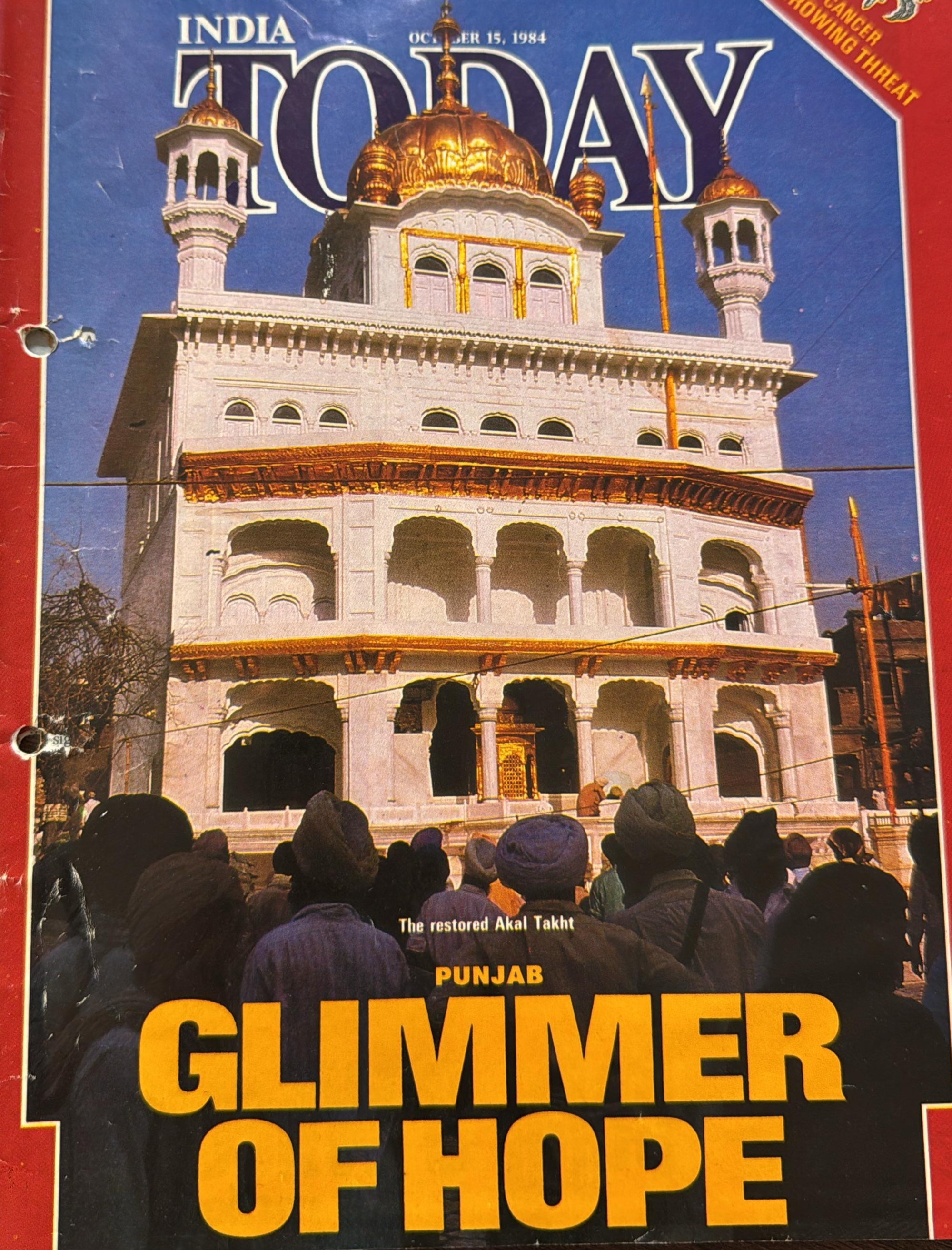
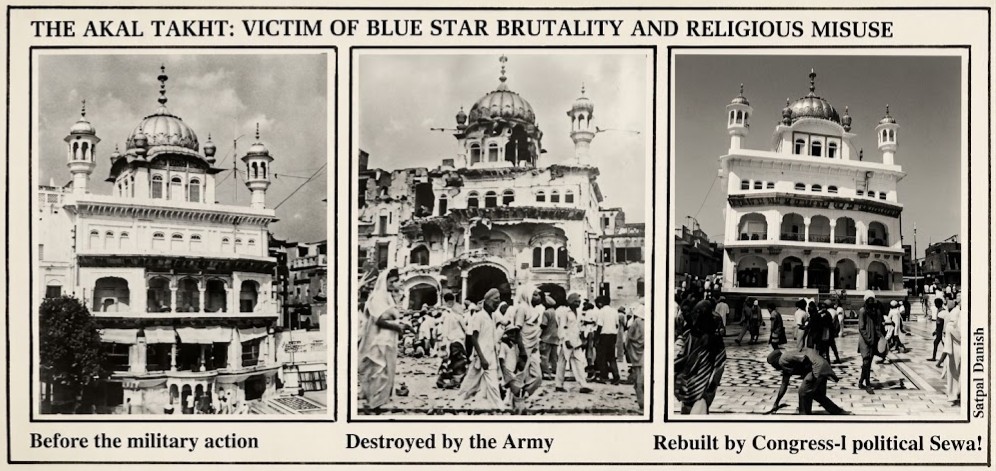
Shaheedi Jathas courted arrest daily at Amritsar in protest, from mid-July through September 30. By the time the sewa finished, some ten weeks later, the Akal Takht Santa Singh's Nihungs had built stood restored, its debris cleared, its opposition largely spent.
Correspondence
Staged Legitimacy
Buta Singh advised it. Every speaker on the stage argued the government's case. It was still called a Sarbat Khalsa.
On August 11, 1984 — 28 Sawan, Samvat 2039 Bikrami — a gathering styled as a Sarbat Khalsa convened in Amritsar to bless the completed sewa. Every recorded speaker took a pro-government, anti-sangharsh line: Rashpal Singh of Delhi opened by reading the gurmattas, Buta Singh defended the gathering's legitimacy, then Narayen Singh Kaleran, Jathedar Kartar Singh of Akali Dal Haryana, and Nihaal Singh of the Namdhari Darbar each spoke in turn, before Santa Singh closed it himself. The footage below, from the original recordings of the day, covers some of these speakers in that same order.
“3rd Resolution) The Sarbat Khalsa has heard the Desh Virodhi (Anti-Indian) slogans which have risen in foreign countries, we want to make it clear that the pro ‘Khalistan’ voice is the enemy of Sikhi and the Khalsa”
“It is being said, why has this Sarbat Khalsa been called — and today Sikh scholars are in pain, and are dropping tears, and saying: why has this Sarbat Khalsa been called?”
“If those people (Sant Jarnail Singh and Jatha) had not been there this attack would not have happened. When they (Sikh Jujharus) were piercing the marble and firing rifles and artillery, where was our Granthis? Why did they not denounce them or take action?”
“The main sevadars, and those who call themselves Mahapurukhs and have made many big buildings and shrines (Baba Kharak Singh) but when it came to Akal Takhat, they did not take the seva”
“Khalsa Ji, today this gathering has shown that the issue that had come, the Hindu-Sikh unity that had disappeared, and the Hindus of Punjab that had planned to leave and many Hindus from Raipur and other areas gave me a chance to preach about Hindu-Sikh unity”
The whole government-staged gathering, from start to finish.
Watch the full video ↗The resolutions passed that day suspended the four Granthis of Sri Darbar Sahib, declared the sitting SGPC president responsible for the shrine's destruction, and pointedly condemned the "pro-Khalistan" voice abroad as an enemy of Sikhi, urging the sangat to stay away from it.
"The Sarbat Khalsa has heard the desh virodhi (anti-Indian) slogans which have risen in foreign countries… the pro 'Khalistan' voice is the enemy of sikhi and the khalsa… Sikhs have always been in the forefronts for India and will continue to serve India based on their principles."
No speaker addressed the killings of civilians, the rape of women inside Darbar Sahib, or any conduct by the army during the assault. What the gathering did do was place the moment's political weight squarely on Sant Jarnail Singh Bhindranwale and the Sikh Jujharus — diverting the anger that had followed his death into a state-sanctioned account of events, with Buta Singh receiving a siropa on stage.
On the Jujharu Singhs and Sant Jarnail Singh Ji
A month after Bluestar, Santa Singh gave India Today an interview that read like a rebuttal of the entire Akali leadership.
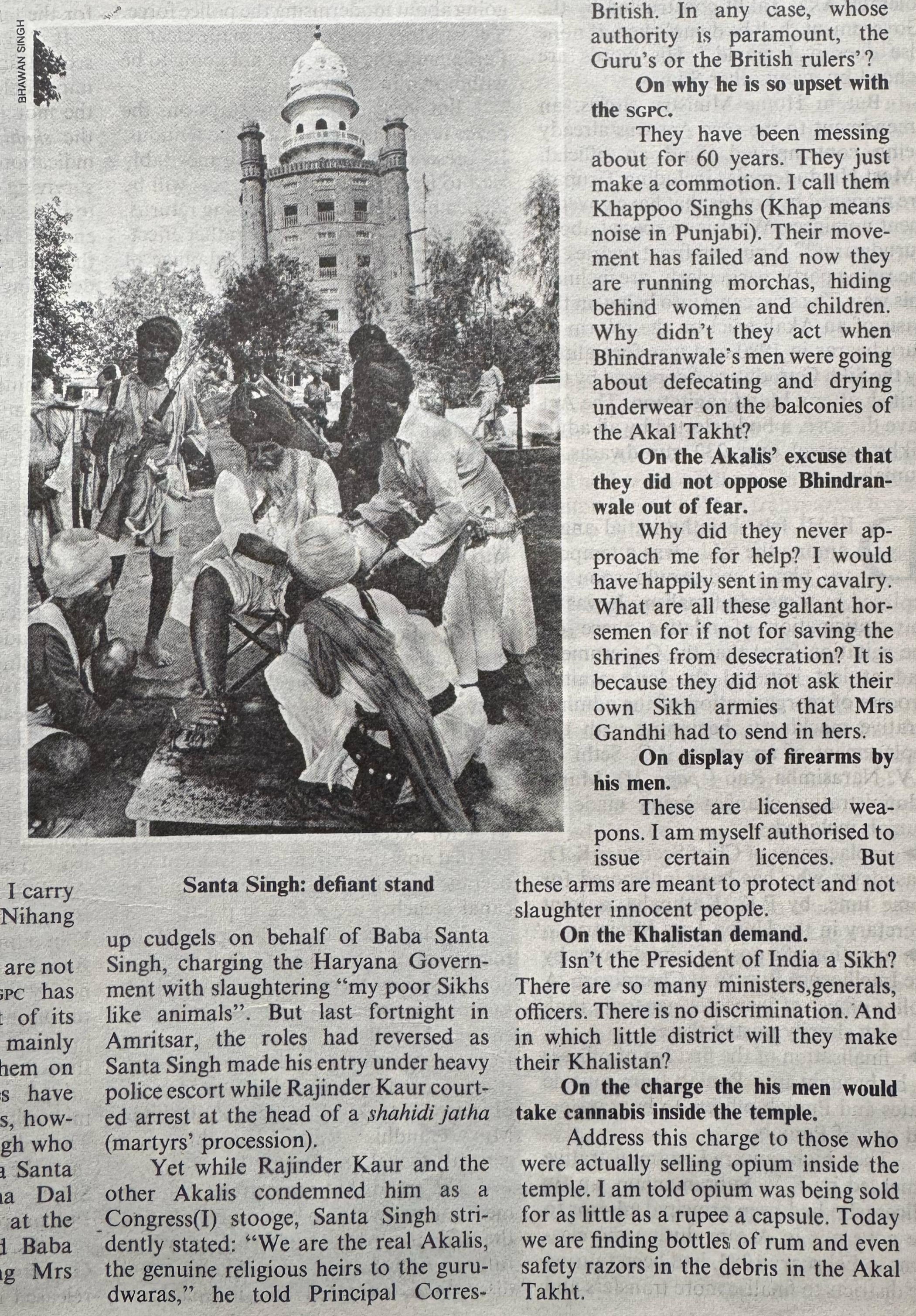
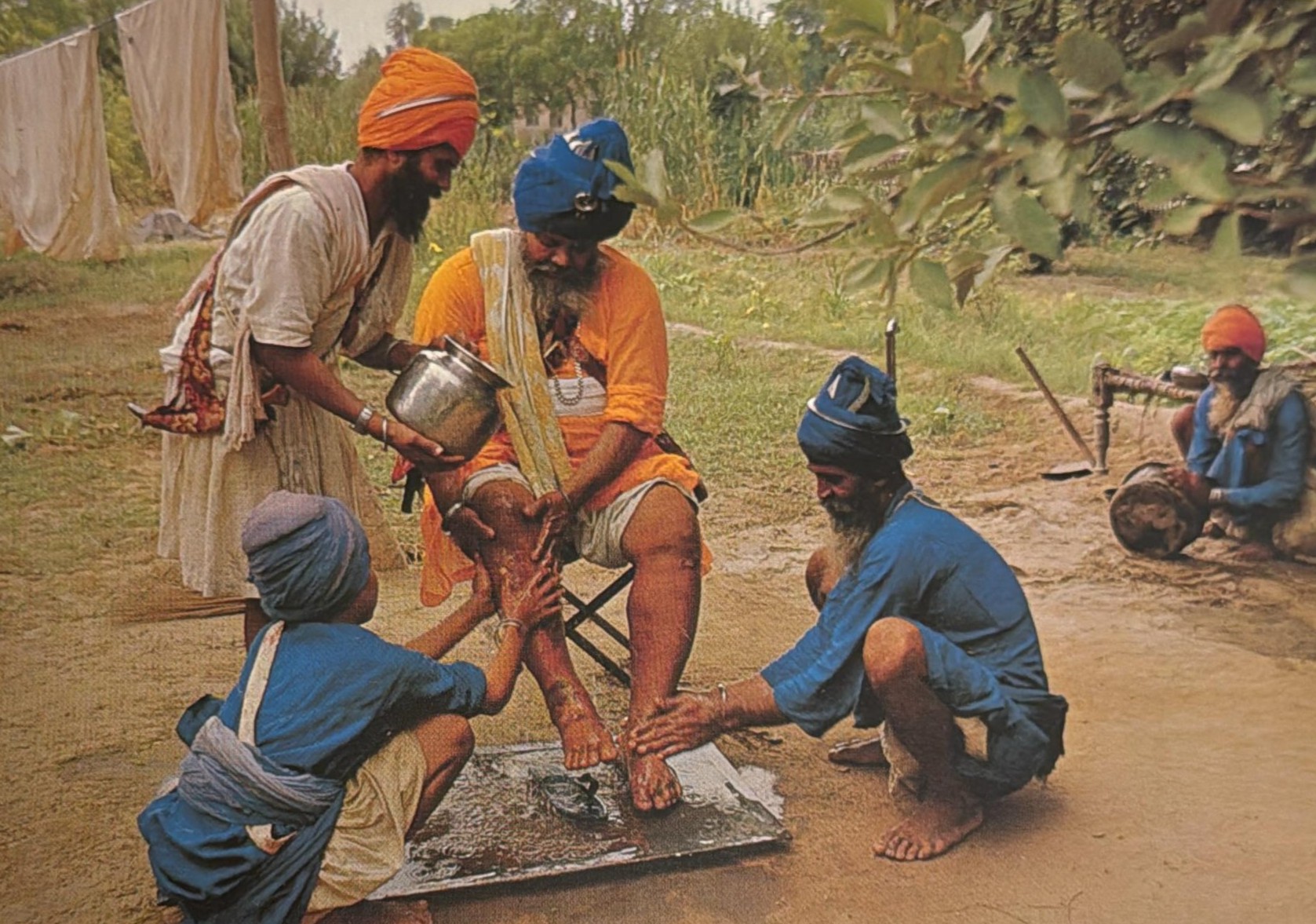
Interviewed by India Today's Shekhar Gupta days after taking up the sewa, Santa Singh dismissed the Akali leadership outright, denied being a government stooge, and turned the question of Sant Jarnail Singh Ji back on the priesthood that had excommunicated him.
"Their movement has failed and now they are running marches, hiding behind women and children. Why didn't they act when Bhindranwale's men were going about defecating and drying underwear on the balconies of the Akal Takht? Why did they never approach me for help? I would have happily sent in my cavalry."
"They have been messing about for 60 years. They just make a commotion. I call them Khappoo Singhs (Khap means noise in Punjabi)… Isn't the President of India a Sikh? There are so many ministers, generals, officers. There is no discrimination. And in which little district will they make their Khalistan?"
Pressed on charges that his men carried firearms and used cannabis inside the temple, Santa Singh's defence pointed the accusation elsewhere.
"Address this charge to those who were actually selling opium inside the temple. I am told opium was being sold for as little as a rupee a capsule. Today we are finding bottles of rum and even safety razors in the debris in the Akal Takht."
It was a convenient redirection. Cannabis and bhang were a documented, longstanding part of Nihung tradition — Santa Singh's own Budha Dal included, whose Singhs were customarily permitted a concoction of cannabis and dry fruit they called garamjal. Rather than address that history, or his own men's conduct, Santa Singh pointed the accusation at unnamed "others" who had been "actually selling opium inside the temple" — a vague, unevidenced claim that, in the context of an interview otherwise spent dismissing the Akalis and the Jujharu Singhs as failures, "Khappoo Singhs," and terrorists, was clearly aimed at the same pro-Khalistan militants he blamed throughout. The debris of rum bottles and safety razors he cited proved intoxicants and contraband had reached the Akal Takht at some point — it proved nothing about who was responsible, least of all the specific charge put to him.
“The governent has worked very smartly with understanding, politeness and ingenuity that in every statement they had said its only a bunch of individuals who are ‘terrorists’ (Jujharus, Khalistani’s) but the rest of sikhs are strong, religious and patriots.”
Sarbat Khalsa Video
The Ranjodh Singh Saga
Santa Singh's own right hand — sent to Delhi to mourn a prime minister, and killed by the mobs that followed her death.
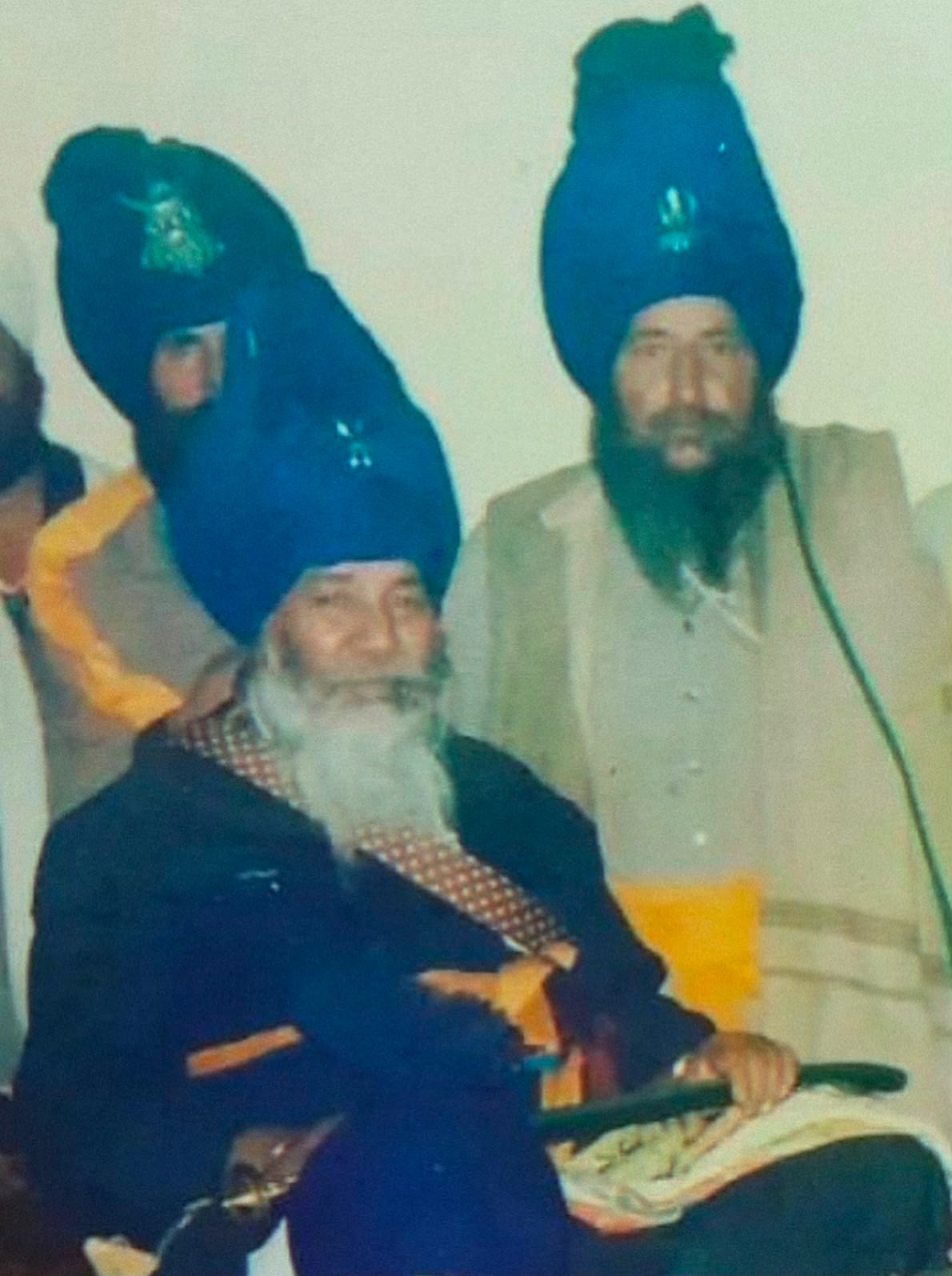
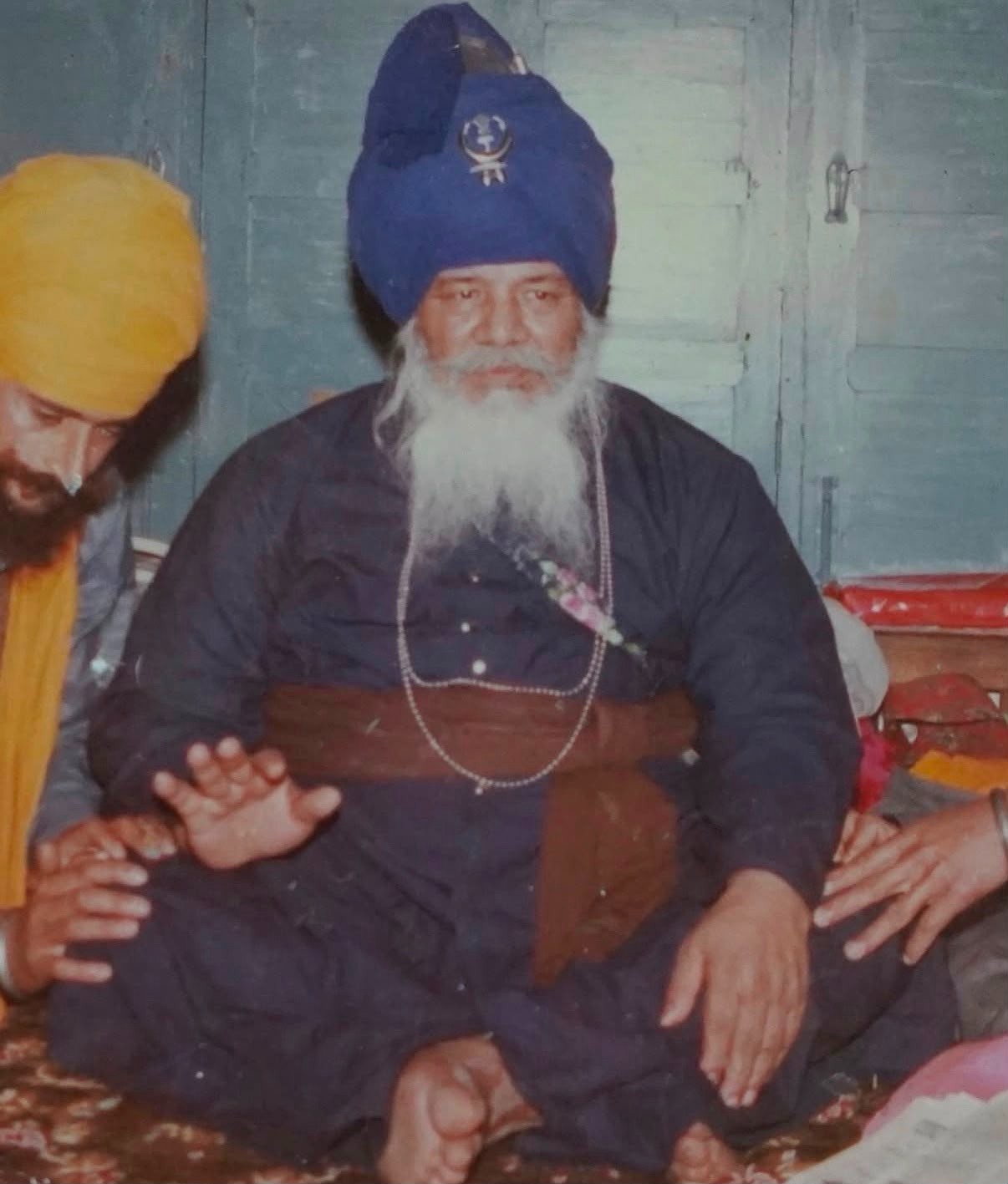
Ranjodh Singh was Santa Singh's garvi — his closest bodyguard and right-hand man, the young Singh most feared within the Dal, and the name on the Punjab National Bank account that held the kar sewa's government funds. He appears in the majority of surviving photographs of Santa Singh from this period, standing at his side.
“On 25 July, Buta Singh got an account opened in Punjab National Bank in the name of Baba Ranjodh Singh, deputy chief of the Budha Dal, by donating Rs 5 lakh. Henceforth, the Budha Dal was to take care of its needs from the account, which would be replenished from time to time.”
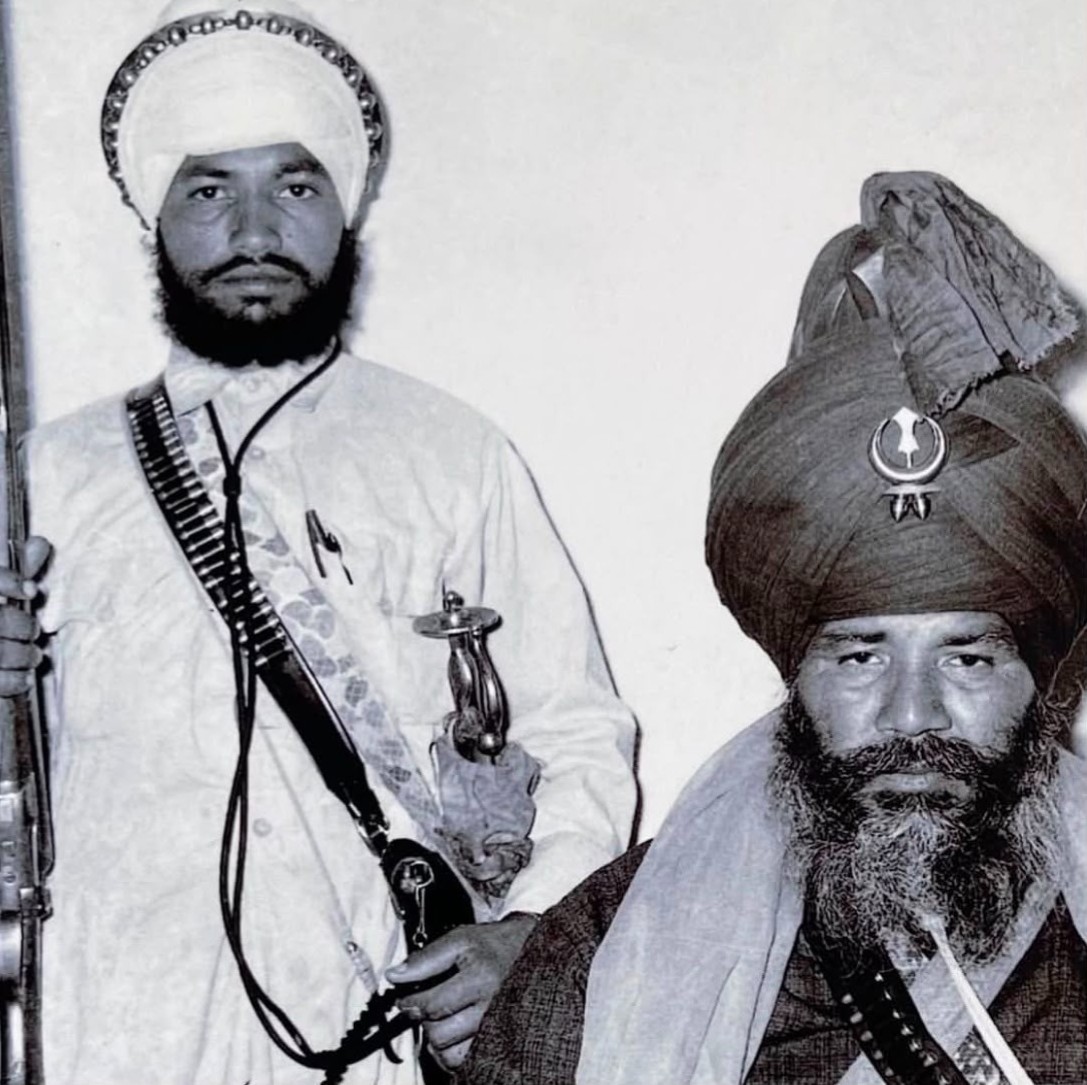
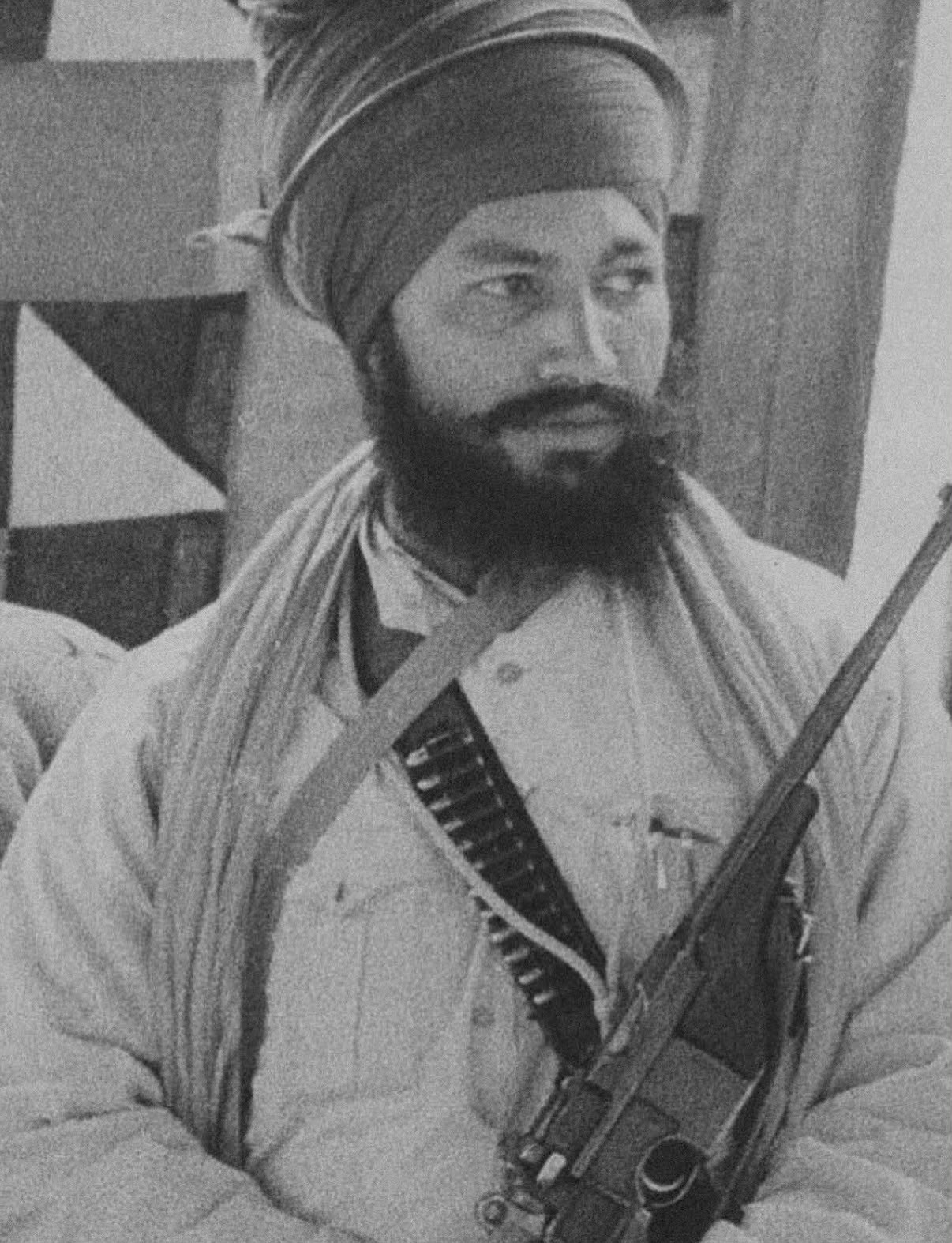
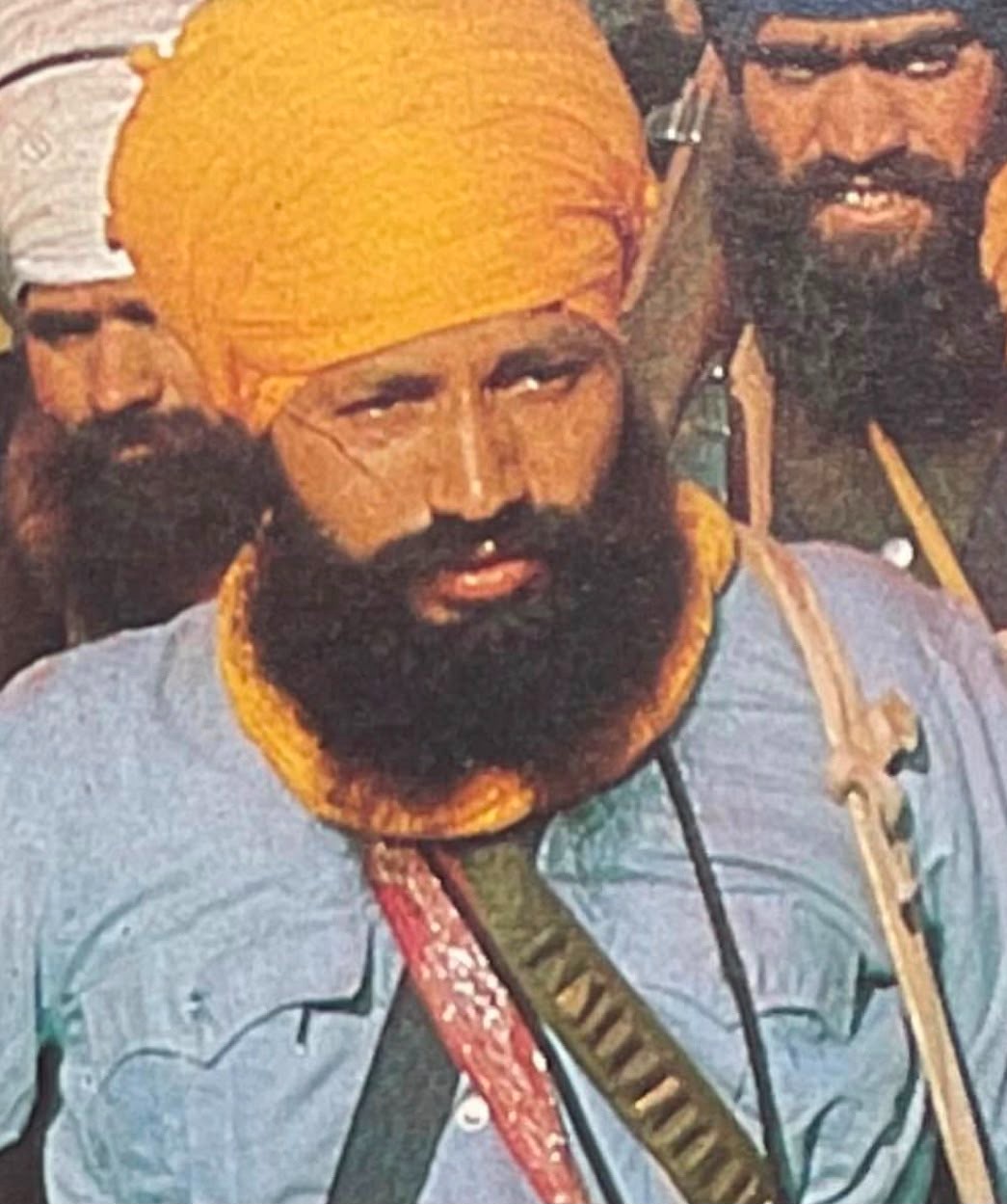
When Indira Gandhi was assassinated in October 1984, Santa Singh sent Ranjodh Singh to Delhi to pay condolences to Rajiv Gandhi. He did not return. Ranjodh Singh and the Singhs who travelled with him were killed by the mobs of the November 1984 genocide — and is remembered as a Shaheed by many within the Dal to this day.
"When Indira Gandhi died, Jathedar Santa Singh was her sakaa. At that time Budha Dal's highest ranking singh was Ranjodh Singh. He was Santa Singh's garvai and was a young boy who everyone in the dal used to be scared of. Santa Singh sent Ranjodh to Delhi after Indira's assassination to pay condolences to Rajiv. Santa said that they have killed our PM, they killed our mother, you need to go. Ranjodh and some singhs went to Delhi and they (the Hindu mobs) killed them all." (Because the Mobs did not spare anyone that looked like a Sikh)
Rebuilt by the Panth
At the January 1986 Sarbat Khalsa, the Panth reversed the government-funded rebuild of the Akal Takht and removed the man who had led it.
On January 26, 1986, a Sarbat Khalsa gathered at the Akal Takht itself. According to one account of that day, the five-member Panthic Committee it appointed announced that the Akal Takht would be rebuilt purely from Sikh resources, and that the work begun with government money, accepted through Baba Santa Singh, was to be reversed.
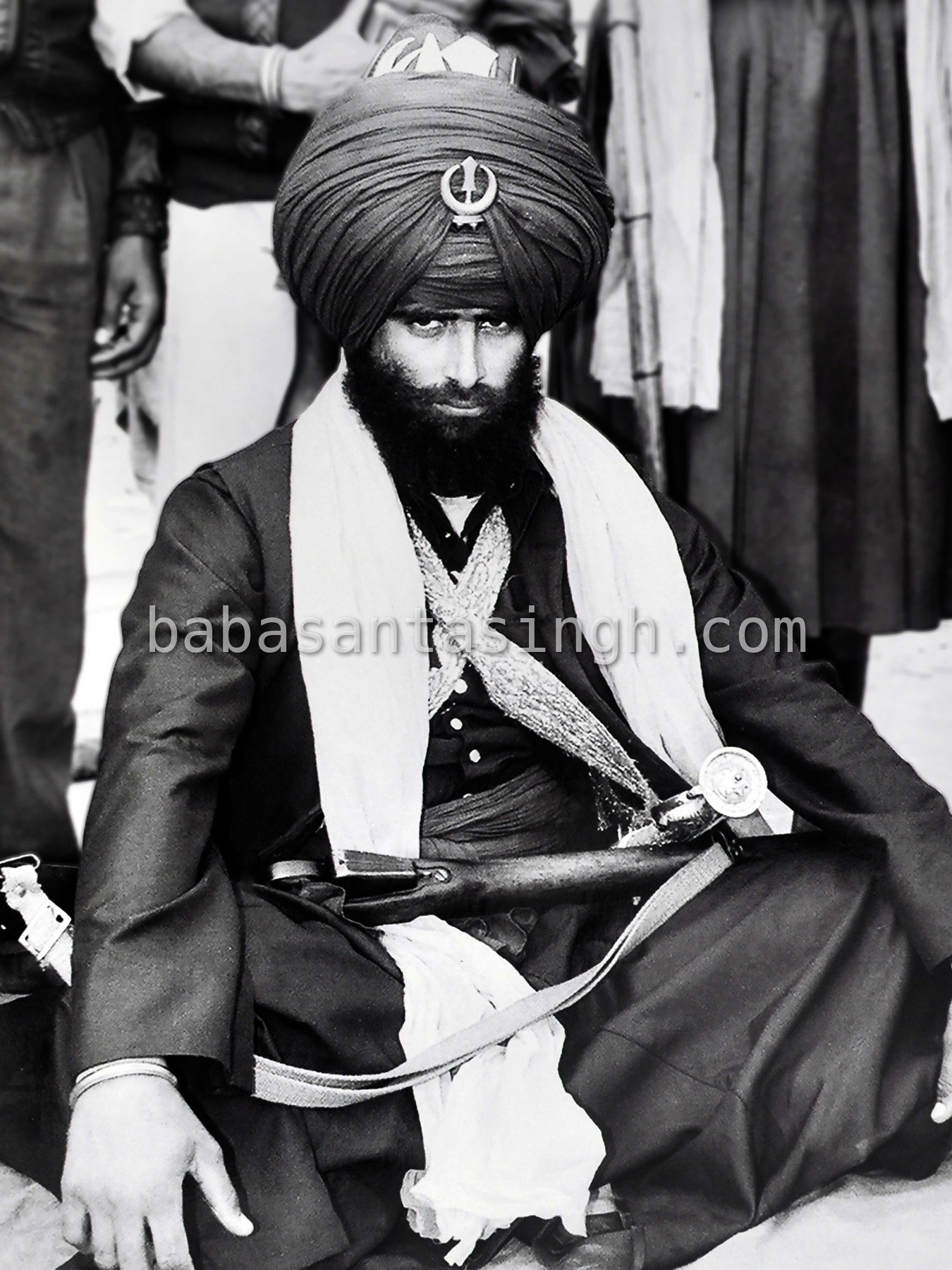
Santa Singh was exiled from the Sikh Panth, and his post as Jathedar of the Budha Dal passed to Bhai Amrik Singh Jaura. The new kar sewa went to the Damdami Taksal under Baba Thakur Singh, with a fund to run it; only Sikhs who kept their kes and were free of intoxicants could take part.
The tankha accepted
Seventeen years after his excommunication, Santa Singh finally accepted the Panth's punishment.
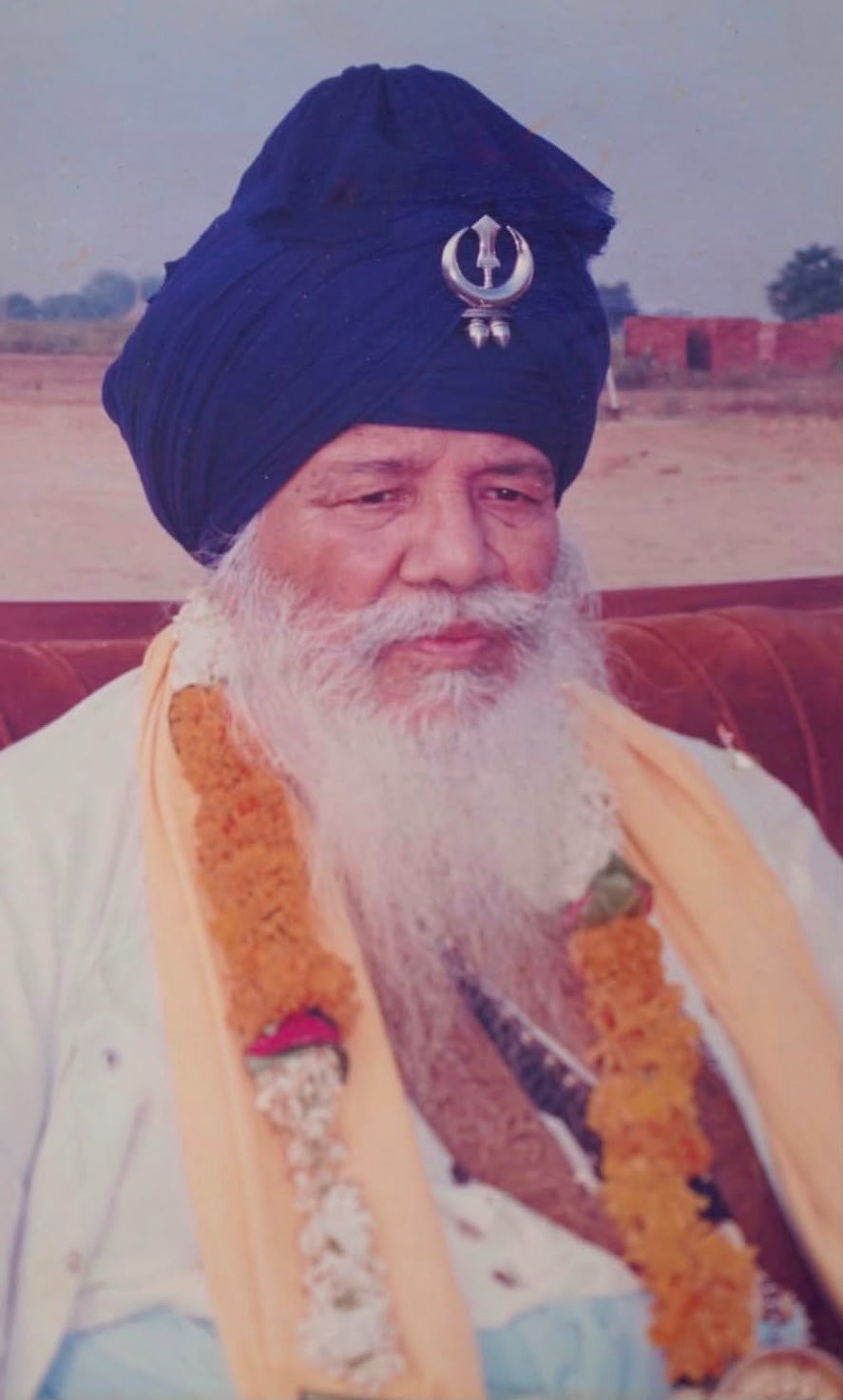
It took until March 2001 — seventeen years, and long after the political moment of 1984 had passed — for Santa Singh to accept the tankhah pronounced against him for carrying out the Akal Takht's construction "against Sikh Maryada." Giani Joginder Singh Vedanti, Jathedar of the Akal Takht at the time, administered the punishment from the same rostrum Santa Singh had once been barred from.
"After 17 years of his excommunication from the Sikh panth for carrying out construction of Akal Takht against 'Sikh Maryada' (after Bluestar) Baba Santa Singh chief of Baba Budha Dal today accepted the 'tankhah' (punishment for religious misconduct) pronounced by Giani Joginder Singh Vedanti, Jathedar from the rostrum of the Akal Takht today."